
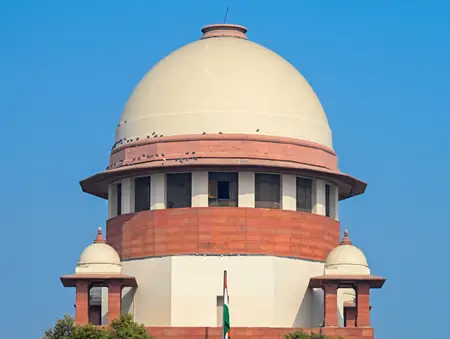
New Delhi, February 19. In a pointed critique of populist freebie culture, the Supreme Court of India has questioned the sustainability of government promises offering free electricity, cash transfers, and other handouts. Chief Justice Sanjaya Kumar Mishra, leading the bench, emphasized that such schemes are draining public finances at a time when states are already grappling with massive revenue deficits and mounting debts.
The court was hearing a petition from power distribution companies in Tamil Nadu challenging the state government’s decision to provide subsidized electricity tariffs to specific communities. This move, they argued, has imposed severe financial strain on the utilities, threatening their operational viability.
‘If governments keep doling out free power, free food, free bicycles, and direct cash into pockets, where will the money come from for real development?’ CJI Mishra remarked sharply. He highlighted how several states, despite being deep in fiscal red, continue to launch new welfare schemes without a clear funding mechanism.
The bench urged governments to shift focus from short-term giveaways to long-term solutions like job creation. ‘States should prioritize opening employment avenues rather than increasing handouts,’ the CJI stated, warning that the current trajectory risks stalling the nation’s economic progress.
Pointing to the timing of these announcements, often just before elections, the court called for introspection among political parties and sociologists. ‘How long can this continue?’ it asked, stressing that while aid for the truly needy is a duty, freebies often benefit those who don’t need them.
This intervention comes amid growing concerns over India’s fiscal health, with many states borrowing heavily to fund electoral promises. Experts note that unchecked freebie politics could undermine infrastructure projects, healthcare, and education investments essential for sustainable growth.
The Supreme Court’s observations signal a potential shift in judicial oversight of state finances, pushing for fiscal prudence over populism. As the hearing continues, all eyes are on how governments respond to this wake-up call.