
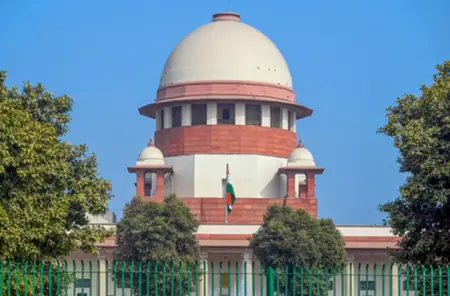
New Delhi’s high-stakes legal battle over the auction of the iconic Hyatt Regency hotel reached a critical juncture in the Supreme Court today. A public interest litigation filed by Infrastructure Watchdog brought to light glaring inconsistencies in the Insolvency and Bankruptcy Code (IBC) processes, prompting sharp observations from the Chief Justice of India (CJI) bench.
Senior advocate Prashant Bhushan, representing the petitioner, argued that the valuation of the luxury hotel was deliberately undervalued to facilitate what he termed a ‘corporate debt waiver’ at the expense of public money. The CJI-led bench, headed by Justice Suryakant, did not mince words. ‘When a poor woman comes to sell her modest home, banks peg its value at 40 lakhs and refuse the deal,’ the CJI remarked. ‘But for a five-star hotel, the rules suddenly change. What kind of justice is this?’
The court expressed deep concern over the opaque valuation mechanisms that appear to favor big defaulters. It demanded a full disclosure from the central government on how the Asian Hotels Group, owners of Hyatt Regency Delhi, underwent valuation after defaulting on loans. Notices were issued to Bank of Maharashtra, Punjab National Bank, and Asian Hotels, requiring detailed responses on the IBC proceedings.
This case underscores a broader malaise in India’s corporate debt resolution framework. Allegations of bank officials’ collusion to slash asset values for quick sales have fueled public outrage. The Supreme Court emphasized that transparency must underpin every step, from loan recovery to asset auctions. ‘If a debtor can repay and save their property, they should get that chance,’ the CJI stated, highlighting the need for uniform standards across cases.
As responses from the involved parties are awaited, this hearing signals the judiciary’s resolve to curb arbitrary practices in high-value insolvencies. It could set a precedent for protecting taxpayer funds from misuse in luxury asset disposals, ensuring accountability in an era of mounting non-performing assets.