
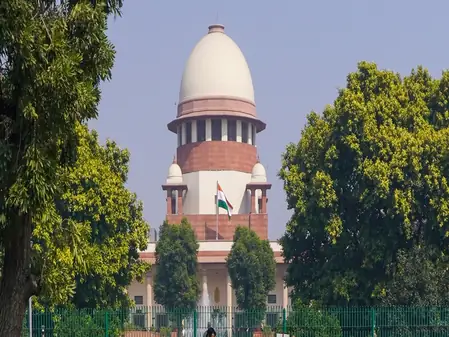
In a significant ruling, the Supreme Court of India on Monday granted bail to advocate Akhilesh Dubey, who had been arrested in connection with allegations of threats and forced extortion. This decision comes after the Allahabad High Court previously denied his bail application, prompting Dubey to approach the apex court for relief.
Dubey’s counsel, Satyam Dwivedi, speaking exclusively to media outlets, highlighted the malicious intent behind the case. ‘Six FIRs were filed against him on the same day out of sheer malice,’ Dwivedi stated. The Supreme Court meticulously reviewed the arguments and the complaints lodged by the Special Investigation Team (SIT), ultimately finding in Dubey’s favor. Notably, the court observed that Dubey has no prior criminal record, and several of the FIRs appeared to stem from a single initial complaint, with many lacking substantial evidence.
The backdrop to this case traces back to last October when the Allahabad High Court rejected Dubey’s bail plea in a Kanpur district court matter. Justice Santosh Rai had cited the gravity of the offenses under Bharatiya Nyaya Sanhita (BNS) sections at Barra police station, concerns over potential witness tampering, and misuse of his professional position as a lawyer. Dubey had been in judicial custody since August 6, 2025.
However, in the Supreme Court, Dwivedi argued that out of the 47 pending cases against Dubey, many were baseless with no evidence uncovered during investigations. The apex court, persuaded by these submissions, approved the bail. Dwivedi expressed optimism that bail in the remaining cases would follow suit, marking a turning point in what he described as a vendetta-driven prosecution.
This verdict underscores the judiciary’s role in safeguarding against frivolous litigation, especially when targeting legal professionals. As Dubey steps out, questions linger about the integrity of the initial probes and the broader implications for advocates facing multiple charges.