
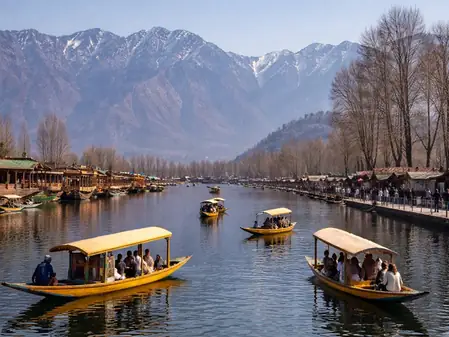
Srinagar experienced an unprecedented heatwave on Saturday, recording the highest maximum temperature for February in history at 21 degrees Celsius. This marks a significant deviation from the norm, surpassing the previous record of 20.6°C set on February 24, 2016.
The India Meteorological Department confirmed that this temperature was nearly 10 degrees above the seasonal average, signaling unusual weather patterns across the Kashmir Valley. Other areas like Gulmarg saw a high of 11.5°C, while Pahalgam reached 17.2°C, both well above expectations for mid-winter.
In the Jammu region, temperatures also climbed higher than usual. Jammu city recorded 25.2°C, 2.9 degrees over average, with Katra at 25°C, Banihal at 19.8°C, Batote at 19.9°C, and Bhadarwah at 21.3°C.
This warmth comes after a disappointingly dry winter season marked by below-average rainfall and snowfall throughout Jammu and Kashmir. The 40-day harsh winter period known as ‘Chillai Kalan,’ from December 21 to January 30, saw minimal snow accumulation, which is critical for replenishing glaciers and mountain streams that sustain summer water supplies.
Experts warn that the limited snowfall, mostly occurring toward the end of the period, coupled with February’s unexpected rise in temperatures, raises serious concerns about water scarcity. Farmers, horticulturists, and agricultural specialists are particularly worried about drinking water shortages and irrigation deficits come summer.
The elevated temperatures further diminish chances of heavy snowfall in the coming days. All eyes are now on March, which could provide a last opportunity to build vital water reserves before the onset of warmer months. Without adequate precipitation, the valley faces a looming crisis that could impact agriculture, tourism, and daily life profoundly.