
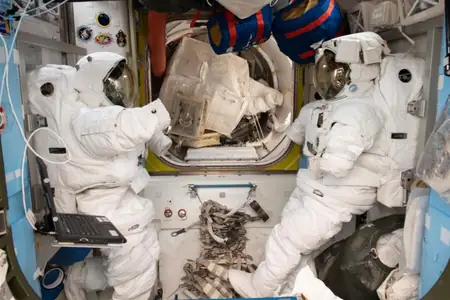
In the vast emptiness of space, where every second counts, the spacesuit stands as a marvel of engineering—a tiny spacecraft enveloping astronauts during perilous spacewalks. Far from a simple outfit, this sophisticated gear shields explorers from the cosmos’s deadliest threats on missions at the International Space Station (ISS).
Spacewalks, or extravehicular activities (EVAs), demand precision amid zero gravity, extreme temperatures swinging from scorching 250°F to freezing -250°F, relentless solar radiation, and micrometeoroids zipping at bullet speeds. The spacesuit counters all this, delivering breathable oxygen, scrubbing carbon dioxide, regulating body heat, supplying drinking water, and enabling fluid movement in the void.
Crafted from multiple layered materials, each component serves a critical role. The rigid Hard Upper Torso (HUT) anchors the helmet, arms, and backpack, providing structural integrity. Flexible arms and gloves allow dexterous tasks, while the helmet’s gold-coated visor blocks harmful UV rays. Boots grip surfaces, and an underlying Liquid Cooling and Ventilation Garment (LCVG) circulates chilled water through tubes to prevent overheating.
At the heart lies the Portable Life Support System (PLSS), a backpack powerhouse packing oxygen tanks, batteries, fans, water reservoirs, and CO2 scrubbers. It powers the suit for up to eight hours. Attached is the SAFER jetpack, with small thrusters to propel stray astronauts back to safety.
NASA is innovating for Artemis lunar returns and Mars ambitions. Upcoming xEMU suits promise enhanced mobility, dust resistance, lighter weight, and durability for rugged terrains. On Mars, higher gravity will demand redesigned, flexible exoskeletons for prolonged exploration, empowering astronauts to conquer new frontiers.