
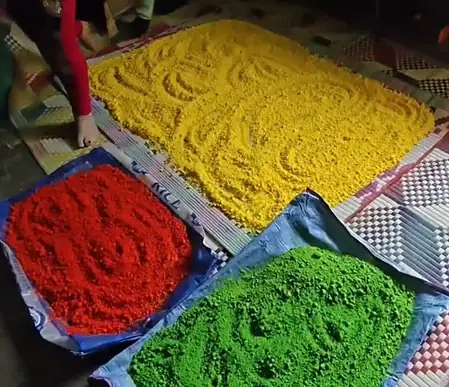
In the picturesque hills of Rudraprayag, Uttarakhand, a group of determined women from self-help groups are pioneering a green revolution just in time for the festive season. These women, hailing from villages like Jawari, Kumoli, Maykoti, Medanpur, and Ukhimath, are meticulously crafting herbal colors using natural ingredients. Their products are now gracing markets in the district headquarters, nearby bazaars, and the development block office, offering a chemical-free alternative to traditional Holi colors.
This initiative isn’t just about business; it’s a powerful statement against the harmful effects of synthetic dyes. Sangita Kaparwan, a key member of the self-help group, shared her enthusiasm: ‘Our herbal colors are made entirely from natural elements and priced affordably at 25 rupees per packet. People are wary of chemical colors that can damage their skin, and ours provide a safe, vibrant option with no adverse effects.’
Monica Kaparwan echoed the sentiment, explaining how they source colors from household flowers and vegetables. ‘We’ve created organic colors right from our homes using petals and spices. The demand is soaring because consumers prefer chemical-free festivities,’ she said.
The spark for this venture came from training programs under the National Rural Livelihood Mission and the Rural Training Institute. Women learned to extract green from spinach leaves, yellow from turmeric, pink and red from beets, and saffron hues from marigold flowers. Now, they’re not only producing these eco-friendly colors but also spreading awareness about avoiding toxic chemicals during festivals.
Bhupendra Rawat, a trainer at the Rural Employment Training Institute, highlighted the timely impact: ‘Last year, we trained these women, and now they’re producing herbal colors for Holi. Festivals see a spike in demand for safe options, and we’re selling through various stalls.’ Director Anup Kumar added that the institute offers diverse self-employment trainings, with special focus on festival products.
As Holi approaches, this movement promises to empower rural women economically while promoting sustainable celebrations. District residents are urged to embrace these swadeshi, natural colors, fostering both health and local livelihoods in Rudraprayag.