
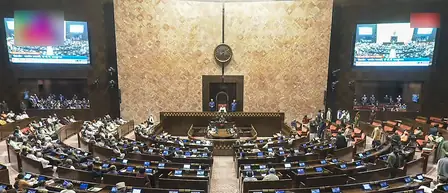
New Delhi is buzzing with political activity as nominations for the Rajya Sabha biennial elections kick off today for 37 crucial seats across 10 states. The Election Commission of India set the stage on February 18, announcing a detailed schedule to fill vacancies arising from the retirement of incumbents whose terms end in April 2026.
The process unfolds methodically. Candidates will file their papers starting Thursday, with scrutiny on March 6 and the last date to withdraw on March 9. Voting is slated for March 16 from 9 AM to 4 PM, followed by counting at 5 PM the same day. To ensure transparency, the Commission mandates the use of only purple sketch pens provided by returning officers for marking preferences on ballots—no other writing tools allowed.
Observers will oversee every step, upholding the Commission’s strict guidelines for fairness. These seats represent Maharashtra, Odisha, Tamil Nadu, West Bengal, Assam, Bihar, Chhattisgarh, Haryana, Himachal Pradesh, and Telangana, making this a high-stakes battle for parliamentary influence.
Major parties have ramped up preparations. The BJP unveiled its list, featuring Nitin Naveen and Shivesh Kumar from Bihar, Teresh Gowala and Jogen Mohan from Assam, Lakshmi Verma from Chhattisgarh, Sanjay Bhatia from Haryana, Manmohan Samal and Sujit Kumar from Odisha, and Rahul Sinha from West Bengal. Notably, the party nominated BJP national general secretary Vinod Tawde for Bihar, marking his return to parliamentary politics after 2019, alongside re-nominating Union Minister Ramdas Athawale of RPI (Athawale), former Nagpur mayor Maya Chintaman Iwante, and Ramrao Wadkute from Hingoli.
In a surprise twist, Congress announced support for NCP-SP chief Sharad Pawar after intense deliberations. Maharashtra Congress chief Harshwardhan Sapkal made the declaration at a press conference attended by Supriya Sule, Vijay Wadettiwar, and Satyajit Patil.
As alliances shift and strategies solidify, these elections underscore the delicate balance of power in India’s upper house, with parties vying to secure long-term legislative footholds.