
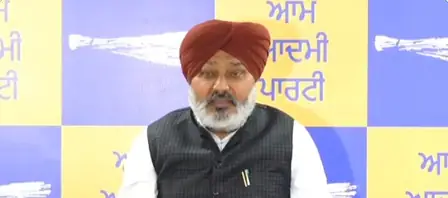
Chandigarh is set to witness a groundbreaking shift in school examinations as the Punjab School Education Board (PSEB) introduces an innovative on-screen marking system for its upcoming March exams. Education Minister Harjot Singh Bains announced this transformative step on Friday, positioning Punjab among the pioneering state boards in India to fully embrace digital evaluation.
The minister highlighted that this digital overhaul will revolutionize the answer sheet evaluation process. Teachers will now assess scanned answer booklets directly on computers, with specialized software automatically tallying scores. This ensures faster, more accurate results while minimizing human error.
“This system has already proven its mettle,” Bains stated, referencing its successful pilot during the September 2025 supplementary exams where 23,000 answer booklets were evaluated swiftly and precisely. Encouraged by these outcomes, PSEB will initially implement on-screen marking for one subject in the Class 10 matric exams this year, with plans for phased expansion.
Security remains paramount in this new framework. Each page of the redesigned answer booklets features a unique QR code, enabling secure scanning and digital processing. Booklets will be scanned in a controlled environment and uploaded to a central dashboard, where evaluators conduct online assessments. Marks are auto-calculated based on predefined schemes, and real-time monitoring ensures quality control.
PSEB Chairman Amarpreet Singh echoed the minister’s enthusiasm, emphasizing the benefits of uniform evaluation and complete transparency for students. “Teachers will operate in a clean digital ecosystem, fostering consistency and reliable record-keeping,” he added. With all technical and administrative preparations in place, the board is fully geared for the March rollout.
This isn’t merely a technological upgrade; it’s a commitment to equitable, efficient assessment that promises every student a level playing field. Punjab’s bold move sets a new standard for educational fairness in the digital age.