
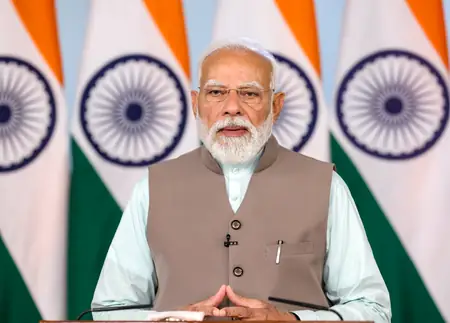
New Delhi is set for a major boost in urban mobility as Prime Minister Narendra Modi prepares to inaugurate two key Delhi Metro corridors on Sunday. This event will mark the completion of India’s first fully operational ring metro line, transforming daily commutes for millions in the national capital.
Delhi Chief Minister Rekha Gupta announced that the Prime Minister will unveil the Majlis Park-Maujpur-Babarpur section of the Pink Line and the Deeplai Chowk-Majlis Park extension of the Magenta Line. These additions will create a seamless 71.56 km loop, easing congestion and promoting greener travel.
The ceremony, hosted at DDA Utsav Sthal-3 near Nirankari Mandal, will also see PM Modi lay foundation stones for three new corridors under Delhi Metro Phase-V (A), with a combined cost exceeding Rs 18,300 crore. These projects promise to strengthen public transport infrastructure across the region.
The Pink Line extension spans 12.3 km with eight elevated stations, connecting vital areas and closing the ring. Chief Minister Gupta highlighted how this will reduce road traffic, cut pollution levels, and make ‘Viksit Delhi’ a reality by enhancing connectivity.
Looking ahead, the Phase-V (A) initiatives include the 9.913 km underground Central Vista Corridor from R.K. Ashram Marg to Indraprastha, featuring nine stations like India Gate, Duty Bhawan, and Bharat Mandapam. This line will link iconic landmarks, boosting access to cultural and administrative hubs.
Another highlight is the 2.263 km Golden Line extension from Aerocity to Indira Gandhi Airport Terminal-1, underground with one new station. The 3.9 km elevated extension from Tughlakabad to Kalindi Kunj will serve stations like Sarita Vihar Depot and Madanpur Khadar.
These developments extend benefits beyond Delhi, aiding commuters from Faridabad, Ballabhgarh via Violet Line to Tughlakabad, and Noida residents via Magenta Line to Kalindi Kunj. Seamless airport access will streamline travel for NCR residents.
As Delhi embraces this metro revolution, the city edges closer to sustainable urban living, with fewer vehicles on roads and cleaner air for future generations.