
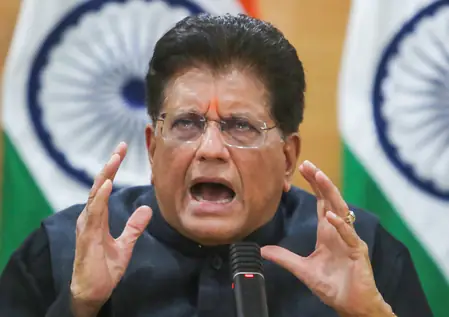
New Delhi’s political arena heated up as Union Commerce Minister Piyush Goyal unleashed a scathing critique of Congress’s longstanding ‘compromise’ politics, directly targeting Rahul Gandhi and his family’s historical decisions. In a bold series of posts on X, Goyal accused the Lok Sabha Leader of Opposition of tarnishing India’s global image by sending shirtless individuals to international AI summits, labeling it a continuation of familial betrayals.
Goyal traced this pattern back to Jawaharlal Nehru’s era. He highlighted how India, under Nehru, rejected a permanent UN Security Council seat in the 1950s to avoid offending China. In 1954, India formally recognized Tibet as part of China, a move Goyal decried as naive diplomacy. The 1962 Sino-Indian war exemplified further lapses, with ignored intelligence warnings leading to a humiliating defeat—reports on which remain classified even today.
The minister didn’t spare Indira Gandhi, pointing to foreign funding influences, the controversial Katchatheevu handover to Sri Lanka, and security decisions riddled with compromises. Rajiv Gandhi faced allegations over the Bofors scandal, where defense deals allegedly involved kickbacks and cover-ups. Goyal noted the escape of Union Carbide’s Warren Anderson after the 1984 Bhopal tragedy and foreign middlemen’s sway through personal ties in defense choices.
Turning to Sonia Gandhi, Goyal alleged shadow power structures during the UPA regime, where real authority bypassed the Prime Minister’s Office. The National Herald case exemplified misuse of party funds to transfer assets to family-controlled entities. Links to foreign donors, including China and Soros networks, raised profound national security concerns.
In a culminating post, Goyal remarked, ‘Congress’s history of misleading statements under Rahul weighs heavy. No matter how much they try to forget, India’s people remember the repeated compromises with national interest from Nehru to Indira and Sonia Gandhi.’ This verbal salvo underscores escalating BJP-Congress tensions ahead of key electoral battles, with Goyal holding up a mirror to the opposition’s past.