
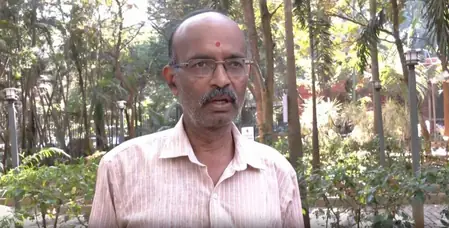
In a significant split among trade unions, the National Front of Indian Trade Unions (NFITU) from Karnataka has distanced itself from the nationwide strike and Bharat Bandh called by 10 central trade unions and farmer groups against the central government’s alleged anti-labor policies. Scheduled for Thursday, the action has exposed deep divisions within the labor movement.
NFITU President V. Venkatesh categorically stated that the strike is purely politically motivated, and his union will not participate. Speaking exclusively, Venkatesh asserted that all labor reforms introduced by the central government are squarely in the workers’ interests. ‘We have instructed all our affiliated unions not to join the strike. Those aligned with us will continue operations on Thursday,’ he declared.
He accused certain political parties, particularly left-wing outfits, of injecting politics into legitimate labor issues. Venkatesh welcomed the four new Labor Codes, praising Prime Minister Narendra Modi, Union Labor Minister Mansukh Mandaviya, and Secretary Vandana Gurnani for their forward-thinking approach. ‘The Wage Code, long overdue, now ensures uniformity across India—a truly positive step,’ he noted.
Recalling his January 16 meeting with Minister Mandaviya, Venkatesh mentioned requesting an increase in the Provident Fund ceiling. He also endorsed the fixed-term trainee scheme, highlighting how it entitles trainees to gratuity upon completion, unlike previous practices where they were let go without benefits. ‘This is a major gain for workers,’ he emphasized.
Questioning the need for strikes, Venkatesh said, ‘Why dive into politics? The minister has invited us for talks. With dialogue open, strikes make no sense.’ He claimed some unions walked out of a scheduled meeting with the minister. According to him, not all sectors will join; many public sector units and private industries plan to stay operational, limiting the strike’s impact mainly to left-affiliated groups.
Meanwhile, the joint platform of central trade unions insists the government’s policies harm workers and predicts disruptions in banking, insurance, power, transport, health, education, gas, and water services during the Bharat Bandh.