
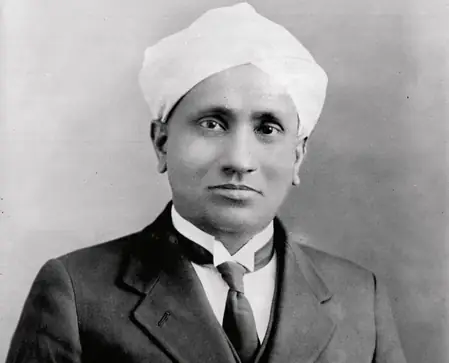
New Delhi, February 28 – India celebrates National Science Day today, honoring the groundbreaking discovery of Sir C.V. Raman, the physicist who transformed our understanding of light with the ‘Raman Effect.’ Born on November 7, 1888, in Tiruchirappalli, South India, Raman overcame immense financial hurdles to etch his name in scientific history.
Ancient India was a cradle of innovation, from superior steel-making techniques to pioneering numeral systems that the world adopted long before modern labs existed. Raman’s story exemplifies this legacy. Fascinated by why the sea appears blue and the sky scatters azure hues, he delved into light scattering. But resources were scarce.
Joining government service in 1907 as an Assistant Accountant General in Kolkata after acing a competitive exam, Raman balanced bureaucracy with his passion. In 1917, he resigned to teach at Calcutta University and pursue research at the Indian Association for the Cultivation of Science (IACS).
Needing a spectrometer but lacking funds, Raman boldly wrote to industrialist Ghanshyam Das Birla, then just 30. ‘Fund 22,000 rupees for this imported instrument, and I’ll win the Nobel Prize,’ he promised. Birla trusted him. Exactly one year later, on February 28, 1928, Raman announced the Raman Effect – the change in light’s wavelength when passing through transparent materials.
This discovery earned him the 1930 Nobel Prize in Physics, making him the first Asian laureate. In 1986, India declared February 28 as National Science Day to commemorate it. Today, events nationwide highlight Raman’s perseverance, inspiring the next generation to innovate without limits.
Raman’s journey from financial constraints to global acclaim underscores that true genius needs opportunity, not just intellect. As India pushes for self-reliance in science, his legacy reminds us: bold ideas, backed by belief, change the world.