
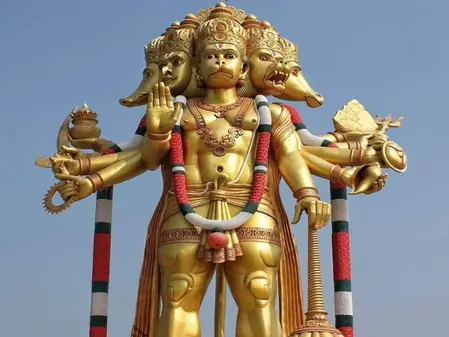
New Delhi, February 27: Hindu devotees are gearing up for the auspicious Narsimha Dwadashi, a revered festival dedicated to Lord Vishnu’s fierce Narsimha avatar. Falling on the Dwadashi tithi of Shukla Paksha in Phalgun month, this day holds immense spiritual significance. Observers undertake strict fasts, perform elaborate rituals, and seek the deity’s blessings for vanquishing enemies, resolving crises, and attaining prosperity.
Scriptures also refer to it as Govind Dwadashi, emphasizing worship of Lord Govind. Adding celestial splendor, this year’s observance coincides with a rare Tripushkar Yoga on Saturday, amplifying the potency of prayers, donations, and auspicious activities. According to Drik Panchang, the Dwadashi tithi commences on February 27 at 10:32 PM and concludes on February 28 at 8:43 PM.
Sunrise is slated for 6:47 AM, with sunset at 6:20 PM. The celestial lineup features Punarvasu Nakshatra until 9:35 AM, transitioning to Pushya; Saubhagya Yoga persists until 5:02 PM; and Karana shifts from Bava to Balava post 9:36 AM.
Prime muhurats include Brahma Muhurta from 5:08 AM to 5:58 AM, Abhijit Muhurta from 12:11 PM to 12:57 PM, Vijaya Muhurta from 2:29 PM to 3:15 PM, Godhuli Muhurta from 6:18 PM to 6:43 PM, and Amrit Kaal from 7:18 AM to 8:49 AM. The highly propitious Tripushkar Yoga spans 6:47 AM to 9:35 AM, ideal for devotional practices.
Steer clear of inauspicious slots: Rahu Kaal from 9:41 AM to 11:07 AM, Yamaganda from 2:00 PM to 3:27 PM, Gulika Kaal from 6:47 AM to 8:14 AM, and Dur Muhurta from 6:47 AM to 7:34 AM. Mark your calendars to harness this divine convergence for spiritual upliftment and positive outcomes.