
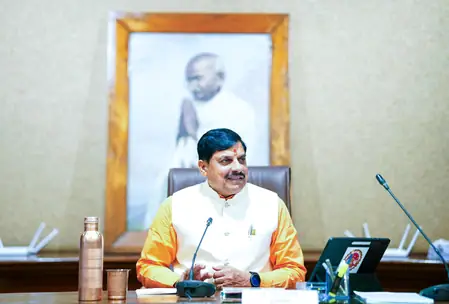
In a groundbreaking move, Madhya Pradesh Chief Minister Dr. Mohan Yadav has announced the state’s inaugural Agriculture Cabinet meeting, set for Monday in the tribal-dominated district of Barwani. This historic initiative, part of the Kisan Kalyan Varsh 2026, aims to propel farmers toward prosperity and self-reliance.
Posting on his X handle, CM Yadav emphasized that the gathering will forge new policies and collaborative efforts to uplift rural communities. ‘2026 is dedicated to farmers’ welfare,’ he stated, highlighting innovations to ensure their happiness and independence. The session will tackle key issues in state development, with farmers’ well-being at the forefront, leading to crucial decisions.
What sets this apart is its unique format, bringing together 17 departments—including agriculture, horticulture, animal husbandry, fisheries, cooperatives, and industry. The goal? Craft a comprehensive, year-long roadmap covering the entire agricultural value chain, from production and processing to marketing, job creation, and entrepreneurship.
Choosing Barwani, a region rich in banana and cotton production where farming sustains most tribal families, underscores the government’s commitment to decentralized decision-making. By holding the meeting in this grassroots area, policies get closer to the ground realities and address local challenges head-on.
The venue, Nagalwadi village, adds cultural flavor as it coincides with the pre-Holi festivities and the vibrant Bhaghoria tribal festival. Officials hint at potential announcements like bonuses, subsidies, expanded irrigation, promotion of natural farming, price support, and better market linkages— a real Holi bonanza for farmers.
This follows CM Yadav’s earlier declarations, positioning 2026 as the year of agriculture after focusing on industry and employment in 2025. Reviving the special agriculture cabinet concept but taking it outside the capital to tribal heartlands marks a fresh approach. Government sources say it will accelerate schemes in dairy, solar irrigation, horticulture, and farmer-producer organizations, driving agricultural growth while easing pain points.
As Madhya Pradesh pushes inclusive development, this Agri Cabinet could redefine how the state nurtures its farming backbone, blending tradition with modern techniques for sustainable progress.