
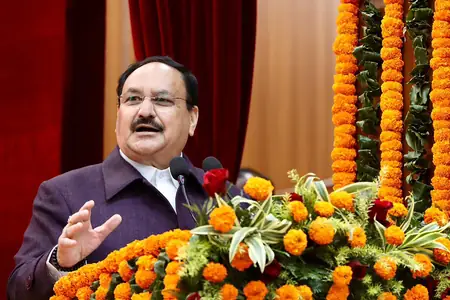
In a significant move to promote Hindi in official administration, Union Minister JP Nadda has been named chairman of the Hindi Advisory Committee under the Ministry of Chemicals and Fertilizers. This appointment, announced on Thursday, underscores the government’s commitment to advancing the use of Hindi in administrative functions.
The committee’s reconstitution includes key figures from Parliament and government departments. Nadda, a prominent BJP leader and current Health Minister, will lead efforts to review and recommend progressive incorporation of Hindi in the ministry’s operations. State Minister Anupriya Patel has been designated as the vice-chairperson.
The official notification detailing the restructuring has been published in the Gazette of India. The revamped panel boasts strong parliamentary representation with six MPs nominated to its ranks. Four of these come from the Ministry of Parliamentary Affairs: Manoj Tigga (Lok Sabha, Alipurduars, West Bengal), Shashank Mani (Lok Sabha, Deoria, Uttar Pradesh), S. Phanganon Konyak (Rajya Sabha, Nagaland), and Sanjay Jha (Rajya Sabha, Bihar).
Additionally, the Parliamentary Committee on Official Language has nominated two Lok Sabha members: Mala Rajya Lakshmi Shah from Tehri Garhwal, Uttarakhand, and Satpal Brahmachari from Sonipat, Haryana. This diverse lineup ensures robust discussions on language policy.
Beyond politicians, the committee features a broad spectrum of members. Four are nominated by the ministry itself, three from the Home Ministry’s Rajbhasha Department, and one each from the World Hindi Conference and Hindi Prachar Sabha in Hyderabad. In total, it comprises one chairperson, one vice-chairperson, 15 nominated members, and 37 ex-officio members, including secretaries from the Fertilizers, Chemicals & Petrochemicals, and Pharmaceuticals departments.
An additional or joint secretary from the Fertilizers Division will serve as the member secretary. The primary mandate is to monitor Hindi’s progressive use in administrative work across the ministry and its subordinate offices. It must ensure strict compliance with constitutional provisions on official languages, decisions of the Central Hindi Committee, the Official Languages Act, and directives from the Home Ministry’s Rajbhasha Department.
The committee’s term is set for three years from the date of formation, with provisions for extension under special circumstances. Nominated MPs will serve until their parliamentary tenure ends, while ex-officio members remain as long as they hold their posts. Vacancies due to resignation or death will be filled for the remaining term only.
Headquartered in New Delhi, the committee has flexibility to hold meetings across India as per official norms. This restructuring signals a renewed push for linguistic inclusivity in governance, potentially setting a precedent for other ministries.