
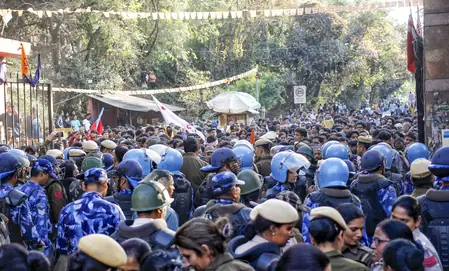
In a significant development, the Patiala House Court in Delhi has granted bail to all 14 students arrested in connection with the Jawaharlal Nehru University (JNU) protest case. The court observed that the accused are neither professional nor habitual offenders, paving the way for their release on Friday.
Delhi Police had fiercely opposed the bail plea during the hearing, urging the court to remand the students to judicial custody. Arguing that further investigation required their detention, police highlighted the risk of the protesters resorting to violence again. They described the event not as a peaceful demonstration but as a violent clash where students scuffled with officers, injuring several policemen.
Police presented evidence of prior incidents, noting four separate FIRs against some accused for using force during previous protests. The prosecution painted a picture of organized disruption, emphasizing the gravity of assaults on public servants.
One female student recounted a harrowing experience in court, alleging that four to five plainclothes individuals dragged her from the crowd, causing injuries to her hand with blood clots forming. This testimony added a personal dimension to the chaotic scenes.
Defence lawyers countered effectively, assuring full cooperation in the probe and offering written undertakings. They stressed the students’ clean records outside this incident.
While acknowledging the seriousness of attacks on police as unacceptable under the guise of protest, the court noted the maximum punishment under charged sections is five years. Balancing these factors, it approved bail on a personal bond of 25,000 rupees each. This ruling underscores judicial caution in handling student activism cases, sparking debates on protest rights versus public order.