
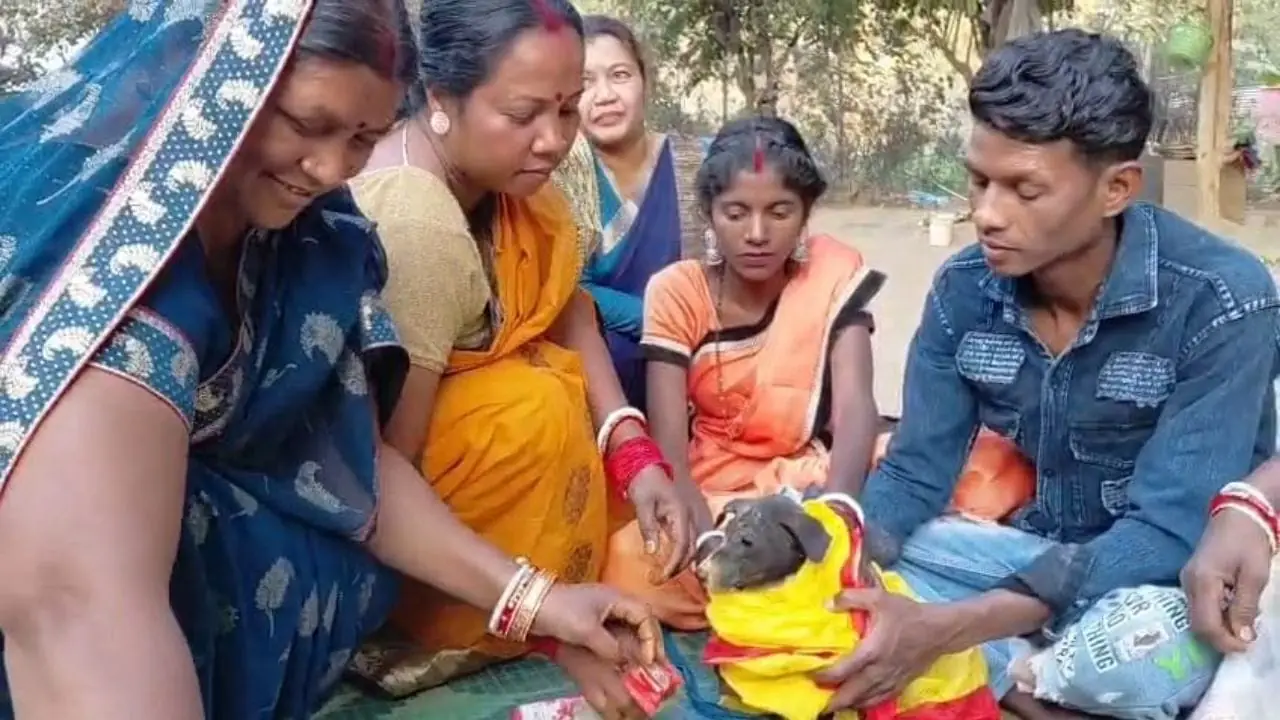
In the heart of Jharkhand’s bustling industrial hub, Jamshedpur, a bizarre tribal tradition unfolded that has left many stunned. Two innocent children were symbolically married to a female dog in a bid to avert supposed misfortune linked to their upper teeth erupting first. This ritual, rooted deep in local folklore, took place during the final day of the Mange Parab festival, known as Harmangeya, in the Shakosain area.
Local elders explain that among certain tribal communities, particularly the Ho tribe, the early emergence of upper teeth in children is seen as an ominous sign. Families believe it invites grave dangers or untimely calamities into the child’s life. To neutralize this ‘curse,’ they perform a ceremonial wedding with a dog, convinced that the rite transfers the ill luck away, ensuring the child’s future safety and prosperity.
The event was no low-key affair. Both children had grand processions, complete with traditional music, vibrant attire, and community revelry. Drums beat loudly as the symbolic marriage rites were conducted with all the pomp of a real wedding. Though purely ritualistic, such practices highlight the enduring grip of superstition in modern India.
This isn’t an isolated incident. Western Singhbhum and surrounding tribal belts have upheld this custom for generations. Elders pass down the belief that such ceremonies shield kids from divine wrath. Similarly, in some regions, the ‘Chidi Daag’ ritual post-Makar Sankranti involves branding young children’s navels with hot iron to prevent lifelong stomach ailments—a practice that raises eyebrows among health experts.
As education spreads and science challenges myths, these traditions persist as badges of cultural identity. Critics decry them as harmful superstitions, urging awareness campaigns. Yet, for the communities, they remain sacred safeguards passed from ancestors, blending faith with folklore in a rapidly changing world.