
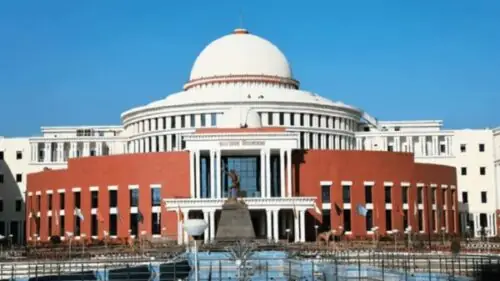
RANCHI: In a bold move to uplift every section of society, Jharkhand Finance Minister Radha Krishna Kishore unveiled a whopping ₹1,58,560 crore budget for the financial year 2026-27 during the fifth day of the state assembly’s budget session. This marks a nearly 9% jump from last year’s ₹1.45 lakh crore allocation under the Hemant Soren government.
The budget, dubbed ‘Aabua Dishom’ or ‘Our Own Province,’ is designed to bring smiles to the faces of Jharkhand residents and wipe away the tears of the poor. Kishore emphasized its focus on farmers, tribals, women, and the underprivileged. A flagship initiative, the Mahila Kushal Yojana for women farmers, has been launched with ₹25 crore to integrate them into modern farming techniques and market linkages.
Education gets a massive boost with plans to open 100 new CM Schools of Excellence. Leveraging the state’s rich mineral wealth, religious sites like Baba Baidyanath Temple in Deoghar, and tourist spots like Netarhat, the government vows inclusive growth. Despite opposition hurdles and alleged central neglect—claiming ₹5,000 crore shortfall in tax shares and ₹11,000 crore in grants—Kishore remains defiant.
The budget details a gross estimate of ₹1,58,560 crore, with revenue expenditure at ₹1,20,851.90 crore (up 9.2%) and capital outlay at ₹37,708.10 crore (up 8.5%). Funding breaks down to state tax revenue ₹46,000 crore, non-tax ₹20,700 crore, central aid ₹18,273.66 crore, tax share ₹51,236.38 crore, public debt ₹22,049.96 crore, and recoveries ₹300 crore. Fiscal deficit is projected at 2.18% of GSDP.
Jharkhand’s GSDP for 2024-25 stands at ₹5.16 lakh crore at current prices, with ambitions to double it in five years via 14% growth. Key engines include agriculture, industry, infrastructure, finance, health, education, skills, and social security. Specifics include expanding cash crop schemes with ₹19.88 crore, 162 cooperative marketing complexes with solar cold rooms at ₹162.20 crore, and upgrading polytechnics to JHIT standards akin to IITs/NITs.
Health initiatives feature PET-CT scans in all five medical colleges, mammography in 24 district hospitals, cath labs statewide, and 750 Aabua Dawakhana clinics for affordable drugs. Infrastructure pushes ahead with ₹1,000 crore for rural roads (1,644 km completed last year) and ₹730 crore for bridges (122 done). Investments worth ₹124,230 crore from World Economic Forum promise 45,000 jobs, plus ₹20,000 crore more for 15,000 employments.
Tourism shines with glass bridges and ropeways at Dasham and Jonha falls, skywalks in Patratu and Netarhat, and eco-circuits across districts. Child-centric schemes get ₹10,793 crore (10.7% of total), while gender budget allocates ₹34,211 crore for 232 women-focused programs across 17 departments. The session adjourned till Wednesday morning after lively Q&A.