
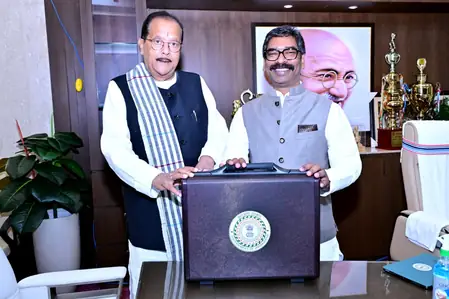
RANCHI: In a bold move reflecting inclusive growth, Jharkhand Finance Minister Radhakrishna Kishore presented the ₹1,58,560 crore ‘Abua Dishom Budget’ for 2026-27 in the state assembly on Tuesday. This visionary document, under Chief Minister Hemant Soren’s leadership, prioritizes wiping tears from the poor and bringing smiles to every citizen’s face.
The budget, a nine percent jump from last year’s ₹1,45,400 crore, underscores commitments to social welfare, agriculture, women’s empowerment, and infrastructure. Kishore emphasized its role in advancing ‘Abua Jharkhand’ – ensuring development reaches the last person in line.
However, the presentation wasn’t without controversy. The minister sharply criticized the central government for slashing financial aid by nearly ₹16,000 crore, including ₹5,000 crore in tax shares and ₹11,000 crore in grants. He highlighted annual losses of ₹4,000 crore from GST rationalization and an extra ₹5,640 crore burden from MGNREGA’s 60:40 funding ratio. Coal companies owe the state a staggering ₹1.36 lakh crore, adding to fiscal woes.
Despite these challenges, the government maintained employee salaries and spent ₹13,000 crore on the Chief Minister Maiyaan Samman Yojana. State revenue is projected to surge from ₹25,521 crore in 2019-20 to ₹66,700 crore in 2026-27.
Women’s welfare takes center stage with ₹14,065.57 crore for providing ₹2,500 monthly to women aged 18-50 under Maiyaan Samman. Pensions get ₹3,517.23 crore, while health receives ₹7,990.30 crore, including ₹200 crore for cancer treatment and plans for 750 ‘Abua Davakhana’ clinics.
Agriculture gets a boost with ₹145 crore for Birsa Seed Production, ₹475.50 crore for soil and water conservation, and ₹400 crore for crop insurance. Rural development allocates ₹12,346.90 crore, including ₹4,100 crore for Abua Awas Yojana.
Education funding stands at ₹16,251.43 crore for primary and secondary levels, plus ₹2,564.45 crore for higher education. Capital expenditure rises 8.5% to ₹37,708.10 crore, fueling roads, irrigation, power, and water projects. Fiscal deficit is pegged at 2.18% of GSDP, with debt-GSDP at 25.3%.
This budget signals Jharkhand’s resolve to build a self-reliant, prosperous future amid central funding hurdles.