
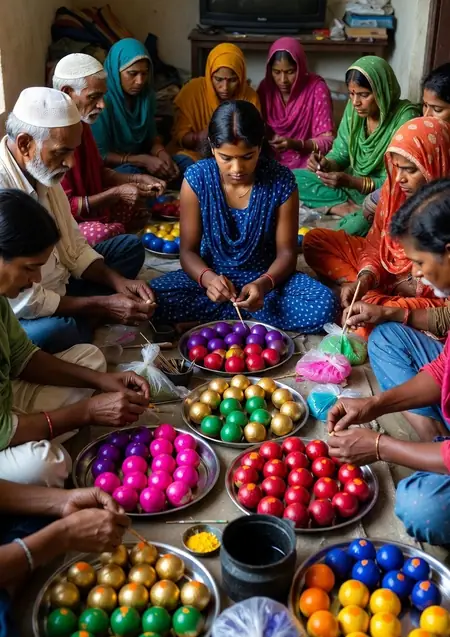
Jaipur, the Pink City, transforms into a canvas of colors during Holi, but one tradition stands out for its unique blend of history and harmony. ‘Gulal Gote’ – delicate lac-filled orbs bursting with fragrant powder – embody centuries of shared cultural heritage between Hindu festivities and Muslim craftsmanship.
These tiny spheres, weighing just 4-6 grams, are crafted from pure lac, engineered to shatter on impact without causing harm. A gentle toss releases a cloud of natural gulal, painting revelers in vibrant hues while preserving the joy of the festival.
The origins trace back to 1727, when Maharaja Sawai Jai Singh II founded Jaipur. From those early days, the Muslim Manihar community in ‘Maniharon ka Rasta’ mastered this intricate art. Today, the 7th and 8th generations continue this labor-intensive process, a testament to enduring interfaith brotherhood.
Crafting a single Gulal Gote demands precision. Artisans melt lac over low heat, blow air through glass tubes to form hollow bubbles, fill them with scented powder, and seal with paper or arrowroot paste. One misstep, and the fragile creation collapses.
Historically reserved for royalty, these orbs were hurled from elephants by kings during Holi processions. Though monarchies faded, the tradition thrives at City Palace, where demand surges annually. Eco-friendly and chemical-free, they offer a sustainable alternative to modern synthetic colors, safeguarding skin and environment alike.
In an era of division, Jaipur’s Gulal Gote remind us of unity’s true colors, where skill transcends religion, binding communities in celebration.