
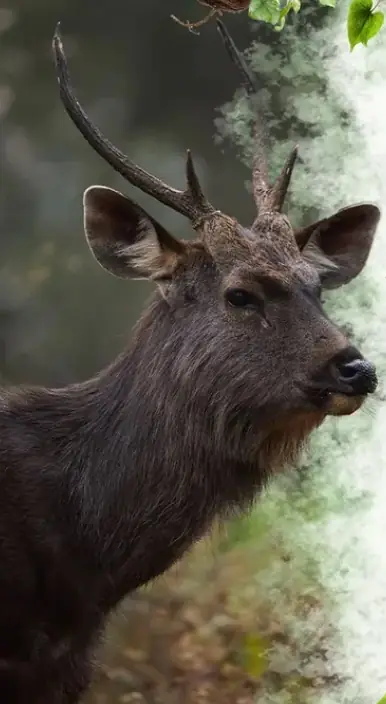
Deep within India’s lush forests roams one of the most formidable creatures of the wild: the Sambar deer, recognized as the nation’s largest deer species. Standing tall with a shoulder height reaching up to 160 cm and weighing as much as 350 kg, this majestic animal commands respect even from apex predators like tigers and leopards.
The Sambar, scientifically known as Rusa unicolor, boasts a robust build covered in coarse, dark brown hair. Males sport impressive, sprawling antlers that can span wide, serving as both weapons and symbols of dominance. Females are slightly smaller and lighter in color. Their body length stretches to 2.7 meters, complemented by a tail of 22-35 cm. These deer thrive on leaves, shrubs, tender grass, and vegetation, preferring habitats near water bodies where their excellent swimming skills come into play.
Primarily nocturnal, Sambar deer are most active during dusk and night, earning them a reputation as elusive wanderers. Found across India, from Himalayan foothills to southern jungles, they also inhabit Nepal, Bhutan, Sri Lanka, and parts of Southeast Asia. In Odisha, the Sambar holds the prestigious status of state animal.
Despite their herbivorous diet, Sambar deer are no easy prey. When sensing danger, they freeze, then erupt into action with thunderous calls, stomping hooves, and bristling neck mane to intimidate foes. They’ve been known to charge predators in shallow waters, fighting with unmatched ferocity and cunning. This resilience has made them a nightmare for hunters.
Habitat loss and poaching have landed the Sambar in the IUCN’s Vulnerable category since 2008. Thriving in dense forests, rainforests, dry woods, and mixed woodlands, conservation efforts are crucial to protect these giants. As India’s forests face pressures, the Sambar’s survival story underscores the delicate balance of nature, reminding us of the wild’s unyielding spirit.