
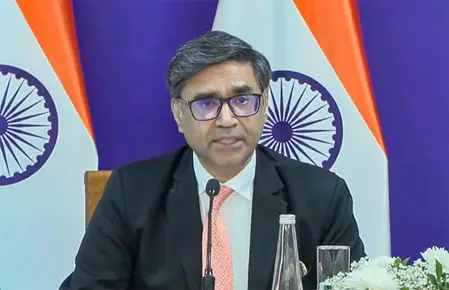
New Delhi: India’s decisions on energy sourcing are firmly rooted in national interests, with a strong emphasis on diversification and competitive pricing, Foreign Secretary Vikram Misri asserted on Monday. This statement comes amid reports suggesting that India might reduce Russian oil imports following the announcement of an interim trade deal with the United States.
Responding to queries on Russian crude, Misri underscored that as a developing economy and major energy importer, securing stable and affordable energy supplies is imperative for India. ‘Protecting the interests of Indian consumers remains the government’s top priority,’ he emphasized.
India imports 80-85% of its energy needs, a dependency that can significantly impact inflation, Misri noted. The government’s aim is to ensure consumers receive energy at the right price, in adequate quantities, through reliable and secure channels.
Highlighting uncertainties in global energy markets, Misri positioned India not just as one of the world’s largest energy consumers but also as a stabilizing force. ‘Our energy import policy is driven solely by objectives of adequate availability, reasonable pricing, and supply reliability,’ he reiterated.
Decisions on energy imports are made by both public and private oil companies based on prevailing market conditions, the Foreign Secretary clarified. ‘I can say with full conviction that whether it’s the government or our business entities, all decisions are guided by national interests,’ Misri affirmed.
Meanwhile, Petroleum and Natural Gas Minister Hardeep Singh Puri informed the Rajya Sabha that India’s strategic petroleum reserves can meet 74 days of requirements in case of global supply disruptions. The Indian Strategic Petroleum Reserves Limited (ISPRL) currently holds about 4.094 million metric tonnes of crude, utilizing nearly 77% of total storage capacity.
Puri also highlighted India’s status as the world’s third-largest crude oil consumer and fourth-largest refiner, with refining capacity expanding from 260 million metric tonnes per year to 320 million metric tonnes per year. This robust infrastructure underscores India’s commitment to energy security amid global volatilities.