
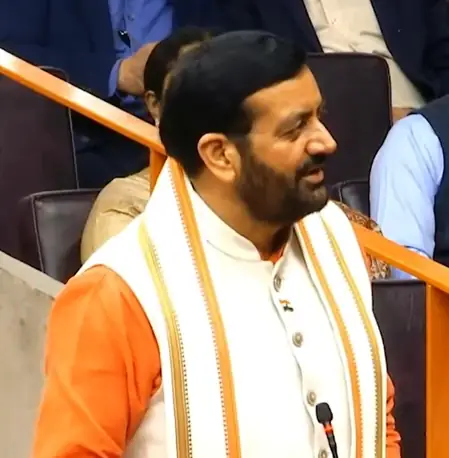
In a significant boost to regional connectivity, Haryana Chief Minister Nayab Singh Saini revealed plans to extend the Rapid Metro line from Gurugram’s Iffco Chowk to Faridabad and Noida. The announcement came during a heated session in the Haryana Assembly’s budget proceedings on Wednesday.
The fourth day of the session was marked by intense exchanges between the ruling party and opposition lawmakers. As many as 20 questions were raised during question hour, with the opposition accusing the government of authoritarian tactics by placing Congress workers under house arrest. CM Saini firmly rebutted these claims, stating that no such house arrests had occurred and directing protesters to the designated venue in Chandigarh’s Sector 25.
Turning to development matters, Saini highlighted a key meeting held on February 24, where the final alignment for the Regional Rapid Transit System (RRTS) corridor was approved. Spanning 52 kilometers within Haryana, this corridor will seamlessly connect Gurugram’s bustling Iffco Chowk to Faridabad and further to Noida. It promises to revolutionize transport by integrating with the existing Gurugram Metro and featuring a 16-kilometer integrated section in Faridabad.
Detailed project reports are in the works, paving the way for swift implementation. This initiative is expected to ease traffic congestion and enhance mobility across the National Capital Region (NCR).
The CM also addressed inter-state smuggling concerns, noting the establishment of a joint secretariat with neighboring states. Union Home Minister Amit Shah’s involvement underscores the seriousness of the issue, with actions taken via the Manas portal while maintaining secrecy. Community leaders, including saints and khap representatives, are actively engaged in anti-drug campaigns, though challenges from external sources persist.
In a heartfelt announcement, Saini assured residents of Chachrauli village of land ownership rights based on comprehensive surveys and historical records. He emphasized that the area, developed on government land since 1887, has been home to families for generations, with registrations continuing until 2020. ‘We cannot leave them insecure on technical grounds,’ he declared, marking a new era of security for these communities.