
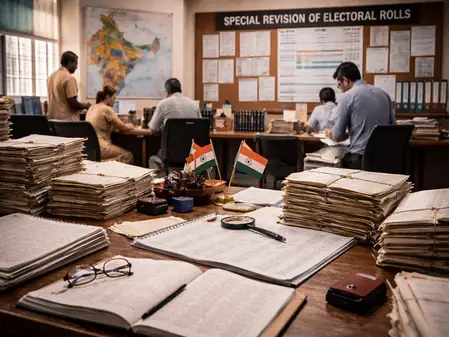
New Delhi is set for a major electoral overhaul as the Election Commission of India (ECI) gears up to initiate the Special Intensive Revision (SIR) of voter lists across 22 states and Union Territories starting April 2026. This sweeping exercise aims to ensure the accuracy and integrity of electoral rolls ahead of future polls.
An ECI official revealed on Thursday that the National Capital Territory (NCT) of Delhi will join Andhra Pradesh, Arunachal Pradesh, Chandigarh, Dadra and Nagar Haveli and Daman and Diu, Haryana, Himachal Pradesh, Jammu and Kashmir, Jharkhand, Karnataka, Ladakh, Maharashtra, Manipur, Meghalaya, Mizoram, Nagaland, Odisha, Punjab, Sikkim, Tripura, Telangana, and Uttarakhand in this comprehensive review process.
Meanwhile, the ongoing SIR in 13 other states and UTs is nearing completion, marking a significant step in the commission’s nationwide push for cleaner voter databases. Chief Electoral Officers (CEOs) in the affected regions have been directed to expedite preparations without delay.
In an advisory issued by Election Commission Secretary Pawan Dewan, the ECI emphasized the urgency of pre-revision activities. ‘The SIR in these 22 states/UTs is expected to commence from April 2026. You are requested to complete all preparatory works for the SIR exercise at the earliest,’ the advisory stated.
This follows ECI’s orders dated June 24, 2025, mandating SIR across all states and UTs, with subsequent instructions on July 5, 2025, to start pre-revision activities everywhere except Bihar. A later announcement on October 27, 2025, kicked off the process in 12 regions, which are now in advanced stages.
The move comes amid concerns over voter list discrepancies highlighted in recent reports from Kolkata. Nearly 20 lakh voter documents remain pending re-verification by District Electoral Officers (DEOs), just days before scrutiny deadlines for draft electoral rolls. Sources from West Bengal’s CEO office indicated most pendings involve ‘logical discrepancies’ flagged by micro-observers.
‘These documents did not match the 13 valid identity proofs mandated by the ECI,’ a source explained. Micro-observers recommended re-verification, sending cases back to DEOs with instructions to report back promptly.
This proactive revision underscores ECI’s commitment to fraud-proof electoral rolls, bolstering public trust in India’s democratic process as it prepares for upcoming electoral battles.