
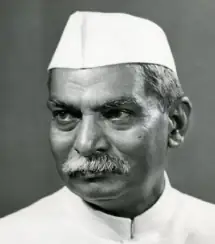
In the heart of India’s independence movement and its nascent republic stood a man of unparalleled simplicity and dedication: Dr. Rajendra Prasad. Born on December 3, 1884, in the modest village of Ziradei in Bihar’s Siwan district, his life journey from a freedom fighter to the nation’s first President exemplifies selfless service.
Dr. Prasad’s father, Mahadev Sahay, was a scholar of Sanskrit and Persian, instilling in young Rajendra a deep respect for knowledge. At just five years old, he began studying Persian, showcasing early brilliance. He completed his schooling at Chapra District School and excelled at Presidency College in Calcutta, securing first-class honors in his intermediate exams in 1902 and earning the Robert Fellowship.
Pursuing higher education, he earned an MA in Economics and a gold medal in Law from Calcutta University in 1915. He became the first recipient of a Doctor of Laws from Allahabad University. Despite a thriving legal career, the call of the nation proved stronger. Inspired by Mahatma Gandhi, he abandoned his lucrative practice in 1920 during the Non-Cooperation Movement.
Dr. Prasad’s role in key satyagrahas—Champaran, Salt, Quit India, and Individual Satyagraha—was pivotal. Imprisoned multiple times, he remained steadfast. He led the Indian National Congress multiple times, chaired the Constituent Assembly, and on January 26, 1950, became India’s inaugural President, serving two full terms until 1962.
Even in Rashtrapati Bhavan, his lifestyle mirrored that of an ordinary citizen. He wore khadi, ate simple vegetarian meals, and performed daily prayers. Rejecting the full presidential salary of 10,000 rupees, he took only half, later reducing it further to 2,500 rupees. He shunned luxuries, handled personal tasks himself, and accepted no gifts.
After retirement, despite frail health, he refused government medical facilities abroad or at home. Instead, he returned to his dilapidated thatched house in Patna’s Sadaqat Ashram, declaring, ‘I will return to where I started.’ He passed away on February 28, 1963, in Bihar Vidyapeeth, leaving behind a legacy preserved in a museum at his final residence.
Dr. Rajendra Prasad, fondly called Deshratna, embodied sacrifice and integrity. On his death anniversary, India honors a leader whose simplicity amid power remains an eternal inspiration.