
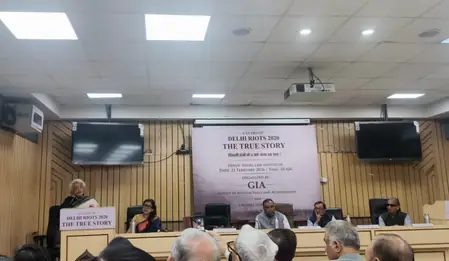
New Delhi witnessed a pivotal discussion on the sixth anniversary of the 2020 Delhi riots, framing them not as isolated violence but as a calculated move in a larger global strategy to destabilize governments. Organized by the Group of Intellectuals and Academicians (GIA) at the Indian Law Institute, the one-day event drew retired ambassadors, former bureaucrats, senior police officers, lawyers, and informed citizens to dissect the riots’ multifaceted implications.
Former Delhi Police Commissioner SN Srivastava set the tone, asserting that the Delhi unrest mirrored a worldwide pattern where riots serve as tools for regime change. He detailed the intense challenges police faced, noting rioters anticipated harsh responses to inflame protests further, a tactic seen in Bangladesh and Nepal. Srivastava emphasized how such provocations aim to portray authorities as oppressors, rallying international sympathy and domestic outrage.
Shifting focus to modern warfare, ex-RAW chief Sanjeev Tripathi unpacked the concept of ‘fifth-generation information warfare.’ He explained how hybrid conflicts leverage riots for narrative crafting, psychological operations, and strategic disinformation, blurring lines between physical clashes and digital battlespaces.
Ambassador Veena Sikri drew parallels with the Bangladesh model, stressing that control over the narrative decides outcomes. She highlighted perception management and international messaging as decisive factors in shaping political results during such crises.
GIA convener Monika Arora labeled the Delhi riots an ‘experiment’ aimed at toppling governance. She called for sustained academic scrutiny and public awareness to counter future threats. Civil society figure Chandar Wadhwan analyzed the ‘deep state’ influence, probing its potential impacts.
The event concluded with GIA’s commitment to advancing public awareness, research, and fact-based discourse on the Delhi riots, ensuring lessons from 2020 guide India’s resilience against hybrid threats.