
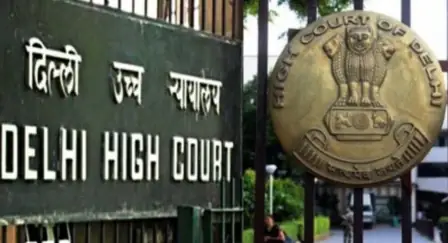
New Delhi witnessed a significant judicial decision on Thursday as the Delhi High Court dismissed a writ petition filed by unsuccessful candidates challenging specific questions in the Civil Services Preliminary Examination 2023, particularly in Paper-II, the Civil Services Aptitude Test (CSAT). The bench, comprising Justices Amit Mahajan and Anil Khatriwal, upheld the Central Administrative Tribunal’s (CAT) earlier order rejecting the candidates’ claims.
The petitioners had argued that around 11 questions in the CSAT paper deviated from the prescribed syllabus, drawing from Class 11 and 12 NCERT levels instead of the mandated Class 10 standard. They contended that this irregularity denied equal opportunity to all aspirants and tainted the entire selection process.
However, the court emphasized the limited scope of judicial review in competitive examinations. ‘Courts cannot sit in appeal over the decisions of examining bodies or substitute their views for those of subject experts unless there is arbitrariness, malice, or patent illegality,’ Justice Mahajan observed.
The Union Public Service Commission (UPSC) presented a detailed report from an expert committee that scrutinized the objections. The committee concluded unanimously that all contested questions fell within the syllabus and that the mathematics questions did not exceed Class 10 difficulty. The bench noted, ‘Once experts affirm the questions’ validity, no grounds exist for compensation or re-evaluation. Courts lack the institutional competence to reassess academic content.’
The court also addressed procedural lapses, pointing out that essential parties, including selected candidates already appointed, were not impleaded. Granting reliefs like revised merit lists or fresh exams would infringe on their rights without due hearing, violating natural justice principles.
With the entire UPSC CSE 2023 process—including mains and interviews—completed, the High Court refused to disrupt public examinations on flimsy grounds. ‘Judicial intervention at this stage would cause irreparable harm to the merit list and administrative efficiency,’ the bench concluded, dismissing the petition and pending applications.
This ruling reinforces the judiciary’s restraint in academic matters, prioritizing expert evaluation and procedural finality in one of India’s most competitive recruitment processes.