
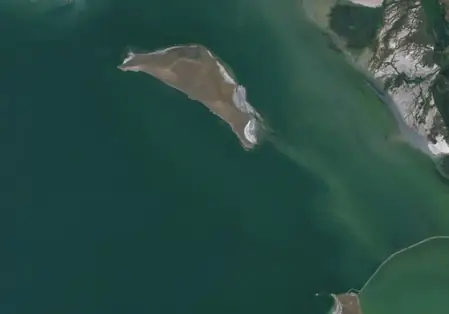
Nestled between Israel and Jordan, the Dead Sea stands as Earth’s lowest point on land, plunging about 1,300 feet below sea level. This hypersaline lake earns its eerie moniker not just from its depth, but because no fish, plants, or animals can thrive in its waters. The staggering salt concentration—eight to ten times saltier than the ocean—creates an environment lethal to most life forms.
NASA’s Landsat satellites have chronicled the Dead Sea’s transformations over decades. Images from 1972, 1989, and 2011 reveal shifting shades of deep blue, bright turquoise, and pale pink, highlighting the lake’s shrinking expanse. The Lisan Peninsula, a natural land bridge splitting the sea into northern and southern basins, is prominently visible in these aerial views. Surrounding sparse green and red hues indicate fleeting vegetation amid the arid landscape.
The high salinity boosts the water’s density, allowing anything—from humans to debris—to float effortlessly on the surface. No sinking here; buoyancy rules supreme. Yet, this wonder faces peril. Intense summer evaporation drops water levels by 2-3 centimeters daily, contributing to a dramatic decline over past decades. Massive salt extraction projects, visible in satellite imagery, exacerbate the shrinkage.
Historically, the Dead Sea has mesmerized civilizations. Ancient Egyptians harvested its salts for mummification, fertilizers, and potash production. Today, sodium chloride and potassium salts from the sea purify water, de-ice roads, and manufacture PVC plastics. Its cultural legacy shines through the Dead Sea Scrolls, ancient manuscripts unearthed from northeastern shore caves between 1947 and 1956. These over 972 texts represent the oldest preserved portions of the Hebrew Bible and other Jewish-Christian writings, revolutionizing historical scholarship.
NASA’s Landsat program, in collaboration with the U.S. Geological Survey, provides free access to this vital data online. Scientists rely on it to monitor environmental changes, underscoring the Dead Sea’s role as a unique natural laboratory threatened by human activity and climate shifts.