
Patna, February 13: The Central government’s directive mandating the recitation or performance of all six stanzas of ‘Vande Mataram’ in official programs has ignited a fierce political debate across India. While the Bharatiya Janata Party (BJP) has wholeheartedly welcomed the move, several Muslim organizations, including Jamiat Ulema-e-Hind, have voiced strong objections.
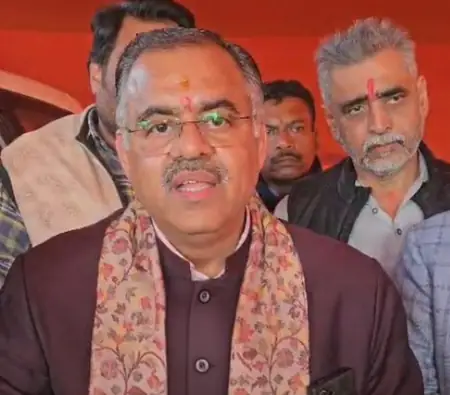
BJP National General Secretary Tarun Chugh led the charge in defense of the decision, emphasizing the song’s illustrious history. ‘Vande Mataram is India’s national song, symbolizing sacrifice, penance, and unwavering devotion to the motherland,’ Chugh declared. He highlighted how millions of freedom fighters chanted these words while laying down their lives during the independence struggle.
Chugh dismissed the opposition, urging citizens to honor the anthem that transcends religion, caste, and creed, fostering national unity and integrity. ‘This is not just a song; it’s the spirit of patriotism,’ he added.
Echoing similar sentiments, Shiv Sena spokesperson Krishna Hegde remarked, ‘Vande Mataram means saluting our mother, praising Mother India who shelters and protects us. Organizations like Jamiat, whose leaders live in India, should not view our national song through a religious lens but celebrate the nation.’
On the other side, Jamiat Ulema-e-Hind General Secretary Maulana Mohammad Hakimuddin Qasmi argued that forcing individuals to recite verses against their religious beliefs violates constitutional rights to practice and propagate one’s faith freely. He stressed that India’s Constitution guarantees the freedom to live according to one’s convictions.
The controversy underscores deeper tensions between nationalistic symbols and minority sensitivities, with political lines sharply drawn. Supporters view the mandate as a tribute to India’s heritage, while critics see it as an imposition on personal faith. As reactions pour in from various quarters, the debate is set to intensify ahead of key electoral battles.