
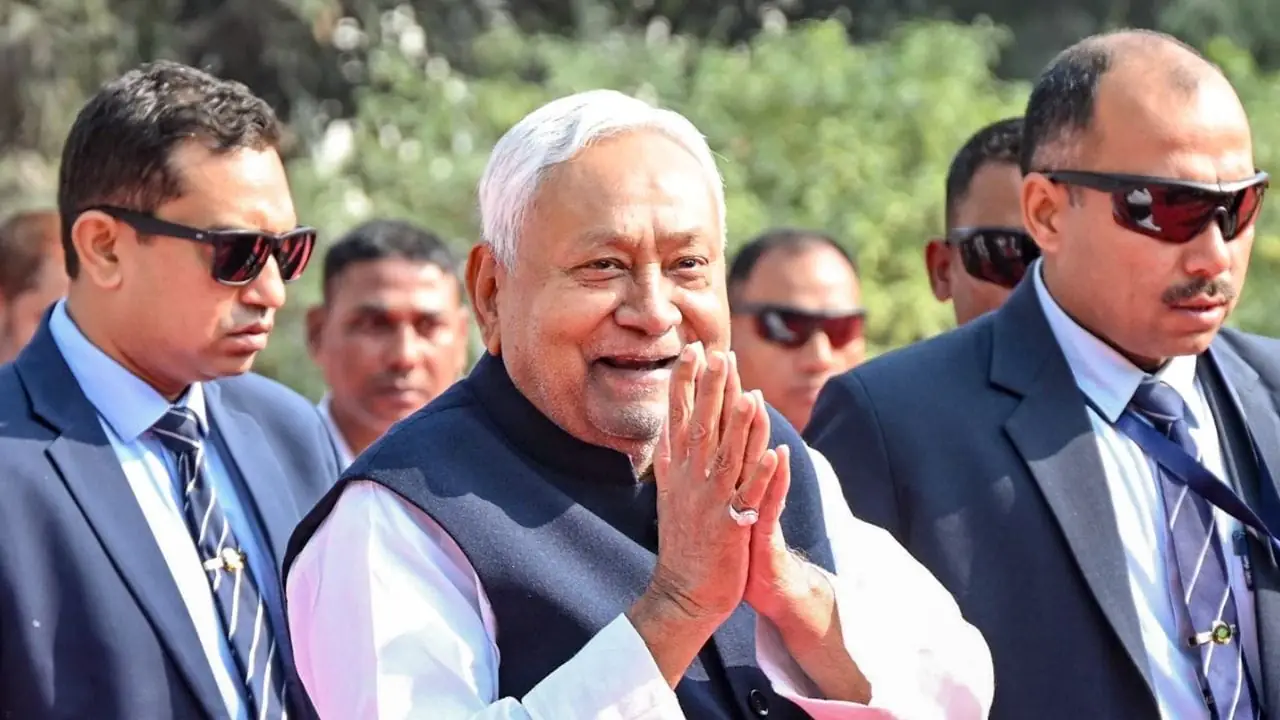
Bihar’s political landscape has been dominated by Nitish Kumar for two decades, with his name now at the center of Rajya Sabha election buzz. As NDA allies file nominations, all eyes are on the Chief Minister, whose mastery of power plays has kept him at the helm since 2005.
Known as ‘Sushasan Babu’ for his governance model, Nitish first teamed up with BJP in 2005 to form a government that transformed Bihar’s roads, schools, and law enforcement. This alliance has been the backbone of his rule, though not without dramatic twists.
Nitish holds the record as Bihar’s longest-serving CM, sworn in for the 10th time after NDA’s 2020 landslide victory. His journey began in the 1970s JP Movement, where he faced jail during Emergency, evolving through Samta Party to JD(U).
Before becoming CM in 2005, he served as Union Minister for Agriculture and Railways in the 1990s. Yet, his tenure has seen multiple alliance shifts: breaking from BJP in 2013 to join Lalu Yadav’s RJD in 2015, returning to NDA in 2017, flipping again in 2022, and back to BJP in 2024.
Key setbacks include 2000, when he lasted just seven days as CM due to lack of majority, and 2014 Lok Sabha debacle forcing his resignation, handing over to Jitan Ram Manjhi as a strategic move to consolidate Mahadalit votes. Manjhi’s nine-month stint ended in party rift.
Nitish’s political acrobatics have earned him the ‘Paltu Ram’ jibe from rivals, but his role in national politics, including INDIA alliance formation, underscores his influence. Bihar’s development and stability remain his enduring legacy amid the alliance rollercoaster.