
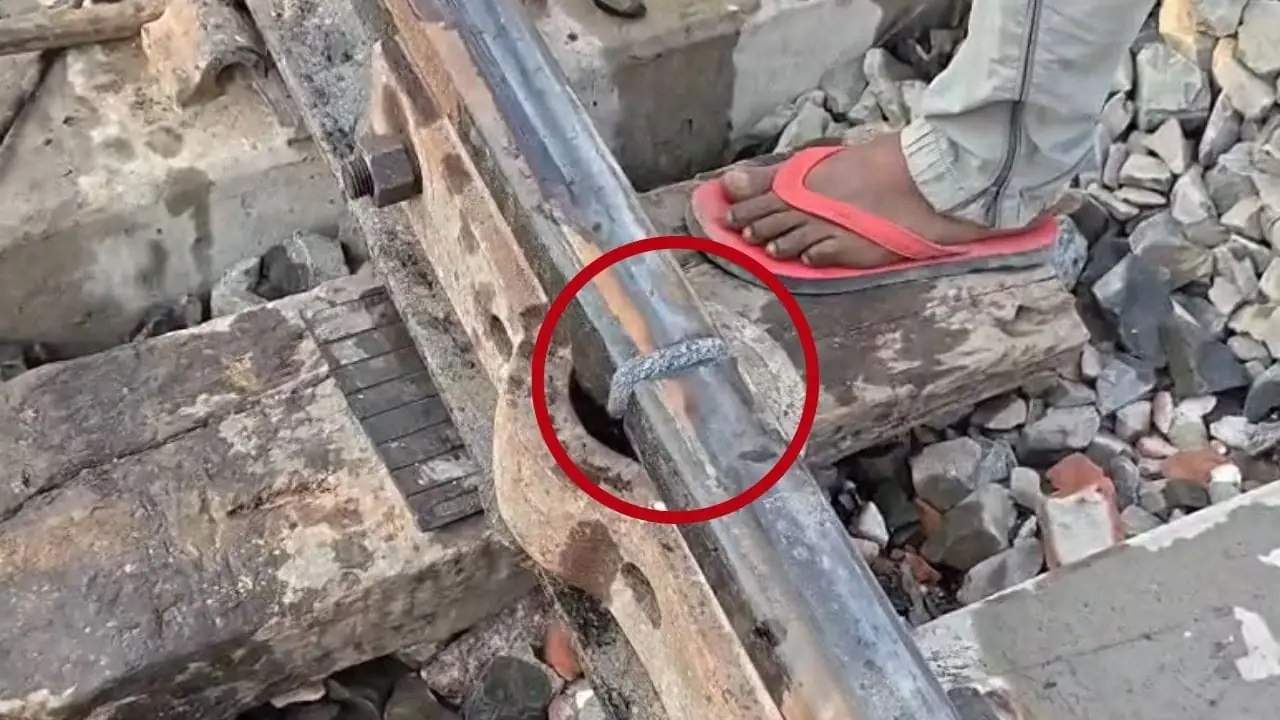
In a heart-stopping moment on Bihar’s railway tracks, a catastrophic accident was narrowly avoided in West Champaran district. The Bagaha-Patliputra Intercity Express hurtled along the Narkatiaganj-Bettiah rail section when disaster struck near Kumarbaag railway station. A broken rail track lay hidden beneath the wheels, but the loco pilot’s razor-sharp instincts saved the day.
Moments after departing Kumarbaag towards Bettiah, the train jolted violently as one or two coaches passed over the fractured track. Sensing something gravely wrong, the pilot slammed on the brakes, halting the train abruptly. Stepping down for a closer inspection, he discovered the severed rail—a ticking time bomb that could have derailed the entire train and claimed hundreds of lives.
Alerted immediately, railway officials and Permanent Way Inspectors (PWI) rushed to the scene. For nearly one and a half hours, the train stood motionless amid growing passenger anxiety. Engineers worked feverishly under intense pressure, welding and securing the track back into place. Only then did the Intercity Express resume its journey, carrying relieved passengers to safety.
The train guard later recounted the chilling sequence of events, praising the pilot’s quick thinking. ‘If he hadn’t reacted to that jolt, we would be talking about a massive tragedy today,’ he said. The incident has ignited serious questions about rail maintenance standards in the region. Why did the track fail so dramatically? Was it sabotage, wear and tear, or sheer negligence?
Railway authorities have launched a high-level probe to uncover the root cause. Preliminary reports suggest possible metal fatigue, but forensic analysis of the broken rail is underway. This close call serves as a stark reminder of the razor-thin margin between routine travel and unthinkable disaster on India’s vast rail network. Passengers, officials, and the nation breathe a collective sigh of relief, but demands for accountability grow louder.