
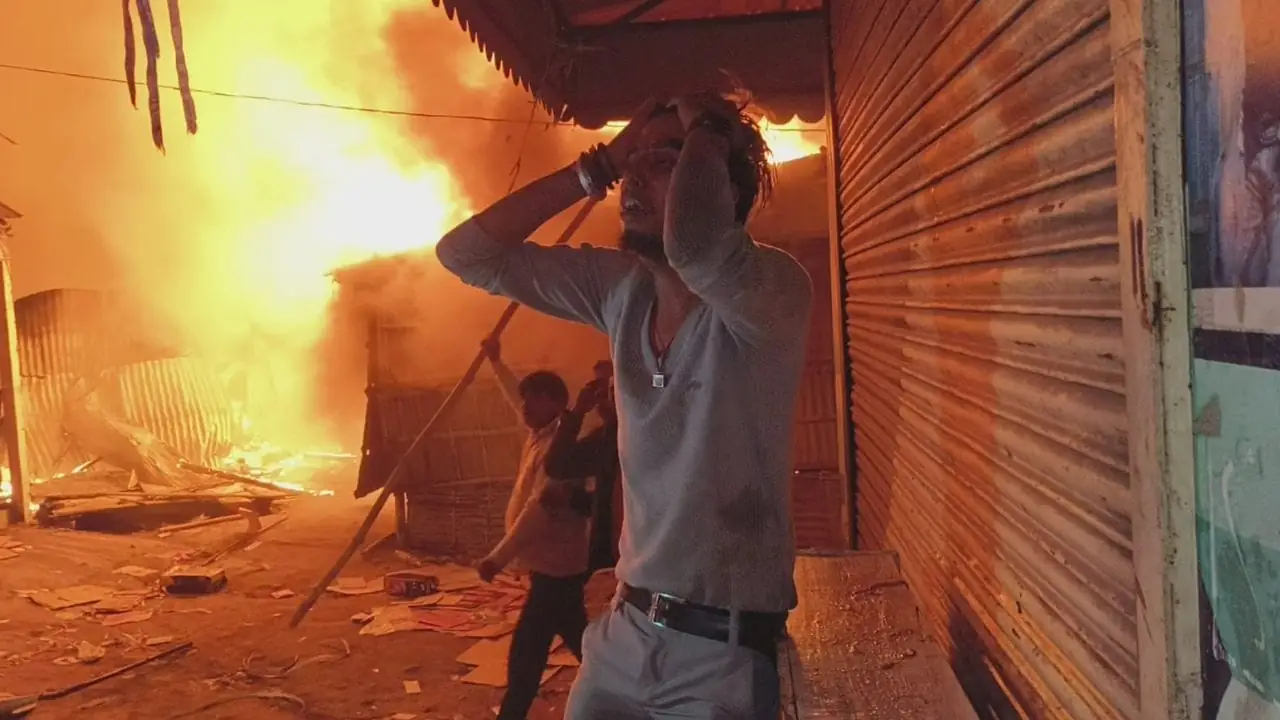
In a matter of minutes on February 15, a quiet Sunday evening in Katihar, Bihar, turned into a nightmare for hundreds of families. A spark at Shaheed Chowk’s State Haat market ignited a ferocious blaze that devoured over 500 shops made of tin and thatch. What started as a small fire in a cloth store rapidly spread, engulfing clothing outlets, electronics shops, vegetable stalls, and mobile stores in a sea of flames.
Eyewitnesses described the scene as apocalyptic. Flames shot so high they lit up the sky visible from 5 kilometers away, casting a red glow over NH-31 and State Highway-77. Panic gripped the area as traffic halted and residents rushed to salvage belongings from their homes. The fire’s ferocity left no time for preparation, reducing livelihoods built over years into smoldering ruins.
Local traders, from small vendors to established merchants, sat amidst the debris, weeping uncontrollably. For many, these shops were more than businesses—they were lifelines, savings for daughters’ weddings, repayments for loans taken to sustain families. Preliminary estimates peg the damage at over 70 million rupees, with clothing and cosmetics shops suffering the heaviest losses.
Firefighting efforts faced severe setbacks. Initial response came from a small local tender that ran out of water quickly. Reinforcements from Katihar arrived too late, after the blaze had peaked. It took hours of relentless struggle to douse the flames, by which time only smoke and anguished cries remained.
Amid the devastation, administrative officials including the SDO, DSP Ranjan Kumar Singh, BDO Kumari Priyavada, and others rushed to the site. Assurance has been given for a thorough damage assessment and prompt government aid to the affected families. As dawn breaks, the question looms large: how will these 500 families light their hearths tomorrow? The Katihar inferno serves as a stark reminder of the fragility of hard-earned dreams in the face of unchecked disaster.