
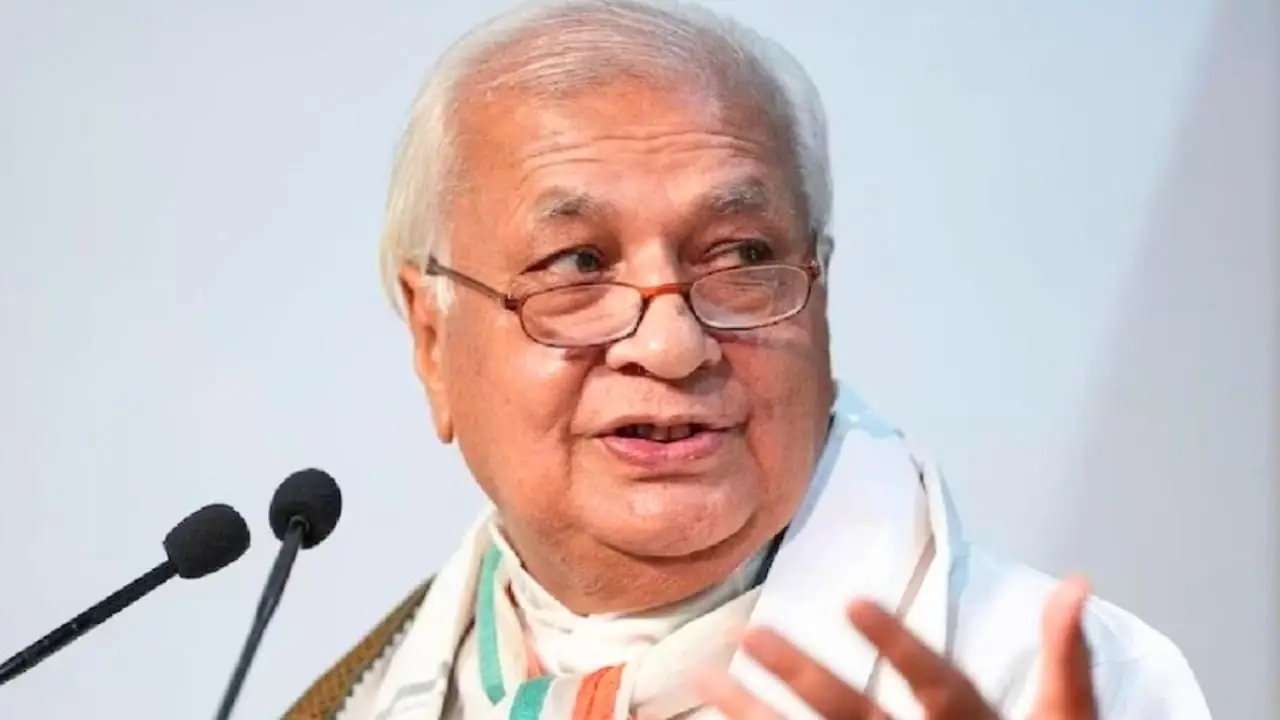
In a candid revelation at the launch of journalist Alok Mehta’s book ‘Revolutionary Raj: Narendra Modi’s 25 Years’ in New Delhi, Bihar Governor Arif Mohammed Khan disclosed how his initial criticism of Narendra Modi following the 2002 Godhra tragedy evolved into admiration after spending over four months in Gujarat.
Speaking at the Constitution Club of India, Khan recounted his transformation. ‘I was a critic of Modi after the Godhra tragedy and the ensuing unrest,’ he stated. ‘But had I not spent more than four months in Gujarat post-riots, engaging with people from various communities, my perspective might have remained unchanged.’
Khan emphasized that his direct interactions revealed a different side to the narrative. He described Modi as unjustly maligned, one of the most misunderstood figures despite baseless accusations. ‘After four months, my view completely shifted, and I began sharing these insights publicly,’ he added.
Praising Modi’s character, Khan portrayed him as a resolute leader who never rushes decisions, works tirelessly, and stays laser-focused on goals. The book, prefaced by Union Home Minister Amit Shah, chronicles Modi’s remarkable journey from Gujarat Chief Minister to India’s Prime Minister over 25 years.
Khan lauded Modi’s role in the Muslim Women (Protection of Rights on Marriage) Act, 2019, criminalizing triple talaq—a practice not legally recognized elsewhere. ‘In 50 years, the world will recognize the monumental work Modi has done,’ he predicted.
The event saw attendees like Oil Minister Hardeep Singh Puri, Rajya Sabha Deputy Chairman Harivansh Narayan Singh, 15th Finance Commission Chairman N.K. Singh, and former minister K.J. Alphons. Puri highlighted India’s economic leap from a $2 trillion economy in 2014 to $4.3 trillion today, now the world’s fourth-largest, poised to become third per IMF projections.
‘India is undergoing something truly remarkable,’ Puri noted, tying it to the AI Impact Summit’s themes. Khan’s testimony underscores how personal experiences can reshape political perceptions, offering a nuanced view on one of India’s most debated chapters.