
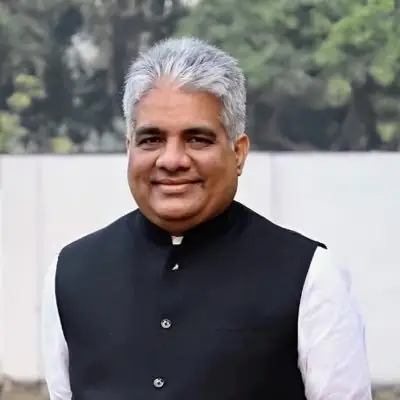
In a significant push for wildlife conservation, Union Environment Minister Bhupendra Yadav inaugurated a key conference in Alwar, Rajasthan, on Saturday. The two-day summit brought together chief wildlife wardens and field directors from tiger-range states to deliberate on bolstering tiger protection strategies.
Yadav urged a comprehensive review of all policy decisions taken in the 28 meetings of the National Tiger Conservation Authority (NTCA) so far. He emphasized identifying outdated resolutions, those that failed implementation, and others fully executed. This exercise, he noted, would realign tiger conservation policies with contemporary challenges and enhance on-ground efforts.
Marking 50 years of India’s tiger conservation journey, the minister deemed this an opportune moment for such an overhaul. He proposed compiling decisions from the past five decades into a formal policy document, making it the top agenda for the next NTCA meeting.
The event saw participation from Rajasthan Forest Minister Sanjay Sharma, senior ministry officials, and representatives from tiger reserves nationwide. Discussions focused on tiger population estimation, rescue-rehabilitation frameworks, human-wildlife conflict mitigation, optimal use of tiger reserve funds, and strengthening conservation foundations.
Yadav suggested forming four working groups to assess region-specific issues, population dynamics, and implementation of centrally sponsored schemes. He advised NTCA to deepen ties with institutions like the Wildlife Institute of India, Botanical Survey of India, Zoological Survey of India, and Indian Council of Forestry Research and Education for research-driven practical gains.
Highlighting the cheetah reintroduction success, Yadav pointed out that India has successfully brought back an extinct species, with the third generation now born here. A new batch from Botswana is expected by late February. Under PM Narendra Modi’s leadership, the International Big Cat Alliance (IBCA) now boasts 24 member countries, with more keen to join as observers. Global bodies like UNDP, IUCN, and FAO are showing interest. The recent Union Budget announced India’s hosting of the first Global Big Cat Summit. IBCA offers solutions to rising temperatures, land desertification, and biodiversity loss.
Noting tigers venturing beyond core areas, the minister stressed robust response systems. He called for clear frameworks for rescue, rehabilitation, and transit treatment centers for injured animals, conflict cases, and orphaned cubs. At the event, he released NTCA’s outreach journal ‘Stripes’ and awarded winners of the National Museum of Natural History’s painting competition.
Over two days, state officials and field managers will tackle priorities like All India Tiger Estimation 2026 preparations, security patrolling, population management, conflict resolution, fund utilization, and fortifying tiger conservation foundations. Reviews of pending tiger death cases will ensure processes align with field realities. The summit aims to foster dialogue across policy, management, and field levels, share experiences, and drive coordinated national efforts.