
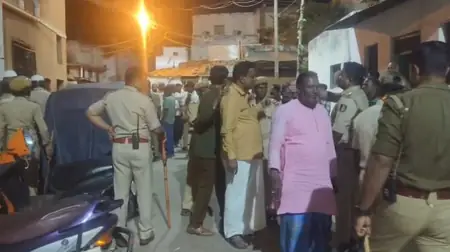
In a pointed critique of Karnataka’s deteriorating law and order, former minister B. Shriramulu has penned a letter to Union Home Minister Amit Shah, demanding an NIA probe into the recent Bagalkot violence. The incident, which erupted during a procession on February 20, has spotlighted recurring tensions in sensitive areas, prompting calls for stricter event management protocols.
Shriramulu, a prominent BJP leader, highlighted a pattern of clashes around public rallies and processions, particularly targeting Hindu youth and activists linked to organizations. He alleged systematic attacks, intimidation, and the filing of counter-cases against victims, even when they claim to be the aggrieved party. ‘This is not about prejudicing any investigation but identifying preventable patterns and fulfilling the Centre’s constitutional duty under Article 355,’ he wrote in the letter.
Recounting the Bagalkot episode, Shriramulu noted that stone-pelting marred the Chhatrapati Shivaji Maharaj Jayanti Shobhayatra in the old city area. Police responded with arrests, and the district administration extended curfew until February 28, issuing notices and deploying forces in vulnerable zones. He stressed the need for standardized procedures in route planning, preemptive restrictions, and intelligence-driven de-escalation.
Drawing parallels to other incidents, the former minister cited the September 2024 Mandya violence, the murder of Suhas Shetty in Mangaluru, and an assault on a Hindu youth in Koppal. These cases, he argued, reveal intelligence failures and prosecutorial lapses in riot and targeted killing probes.
Shriramulu urged a high-level review meeting involving Karnataka’s Home Department and DGP with the Union Home Ministry. He advocated for a uniform Standard Operating Procedure (SOP) covering procession permits, route fixation, no-go buffer zones near sensitive sites, peace committee protocols, and real-time tension control measures. Such steps, he believes, could prevent future flare-ups and restore public confidence in the state’s policing.