
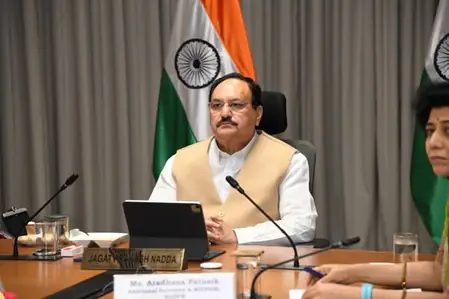
In a landmark push towards eliminating cervical cancer, Union Health Minister JP Nadda announced that over 86 million women have been screened under India’s National Programme for Prevention and Control of Non-Communicable Diseases (NP-NCD). Speaking virtually at a World Health Organization (WHO) press briefing in Geneva, Nadda underscored India’s unwavering commitment to women’s health as a national priority.
Cervical cancer remains a formidable public health challenge globally and in India, claiming countless lives annually. The minister highlighted the country’s multifaceted strategy, emphasizing prevention, early detection through screening, and timely treatment. A key pillar of this effort is the population-based screening program integrated into comprehensive primary health care services.
Visual inspection with acetic acid (VIA) is now routinely available at Ayushman Arogya Mandirs and health centers nationwide for women aged 30 to 65. This initiative has already screened more than 86 million women, demonstrating India’s dedication to early detection and prevention.
Nadda revealed a major milestone: the nationwide Human Papillomavirus (HPV) vaccination drive launched by Prime Minister Narendra Modi on February 28. Targeting 12 million girls aged 14, the 90-day campaign administers a free dose of the Gardasil Quadrivalent vaccine at designated government health facilities.
The voluntary program prioritizes parental consent, respecting community values and family autonomy. Frontline health workers play a crucial role in outreach, building trust, and ensuring successful implementation.
India fully endorses WHO’s global strategy to eliminate cervical cancer, including the 90-70-90 targets by 2030: 90% HPV vaccination for girls, 70% screening for women, and 90% access to treatment. Nadda called for stronger global collaboration to eradicate this preventable disease.
WHO Director-General Dr. Tedros Adhanom Ghebreyesus praised India’s efforts, calling the HPV campaign the world’s largest free vaccination drive. He noted India’s stark reality—over 80,000 women die annually from cervical cancer, with 42,000 new cases each year—underscoring the urgency of vaccination and screening.
South Africa’s Health Minister Dr. Aaron Motsoaledi also congratulated India on its nationwide initiative during the briefing.