
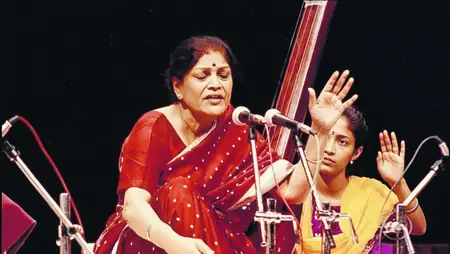
In the rich tapestry of Indian classical music, few voices have left an indelible mark like Shobha Gurtu, fondly remembered as the ‘Queen of Thumri.’ Born on February 8, 1925, in Belgaum, Karnataka, her journey from a dancer’s daughter to a global icon redefined semi-classical genres.
During an era when thumri was fading into obscurity, associated mainly with dance performances in intimate gatherings, Gurtu breathed new life into it. She elevated thumri to the stature of pure classical ragas, performing it on prestigious stages worldwide, including New York’s Carnegie Hall. Her seamless fusion of thumri, dadra, kajri, and hori showcased an artistry that captivated audiences.
Trained initially by her mother Menkabai Shirodkar, a renowned dancer, Gurtu later honed her skills under ustads Bhurji Khan and Natthan Khan. Her expressive facial gestures and emotive delivery turned every rendition into a vivid storytelling experience, blending technical precision with profound emotional depth.
Venturing beyond concerts, Gurtu lent her magical voice to Bollywood. Her soul-stirring ‘Bandon Baandho’ in 1972’s Pakeezah became legendary, followed by memorable tracks in Fagon (1973) and Main Tulsi Tere Aangan Ki (1978). Collaborations with kathak maestro Pandit Birju Maharaj further amplified her influence.
Gurtu’s accolades include the Sangeet Natak Akademi Award in 1987, Lata Mangeshkar Award, Shahi Maharaja Award, Maharashtra Gaurav Award, and the prestigious Padma Bhushan in 2002. She passed away on September 27, 2004, but her legacy endures, inspiring generations to embrace thumri’s timeless charm.