
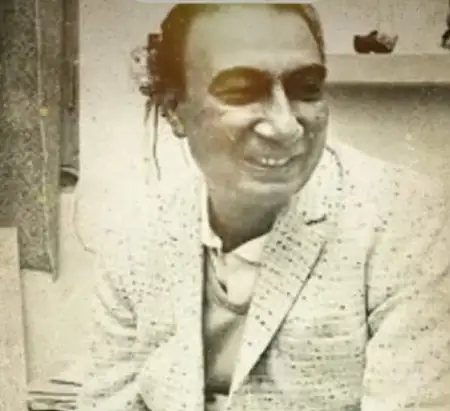
In the glittering world of Hindi cinema, few names evoke as much reverence as Sahir Ludhianvi. Born on March 8, 1921, in Ludhiana, Punjab, into a once-prosperous family, Sahir’s life was a tapestry of hardship and triumph. His real name, Abdul Hai, belied the poetic fire that would one day ignite Bollywood’s golden era.
Sahir’s childhood shattered early when his parents separated, leaving him and his mother in dire poverty. Scrounging for survival, young Sahir took up odd jobs, from editing Urdu newspapers to whatever paid the bills. Yet, amidst the struggle, his passion for poetry burned bright. In 1945, his debut collection ‘Talkhiyan’ burst onto the scene, marking him as a bold new voice in Urdu literature with its sharp critique of societal norms.
By 1949, Mumbai beckoned. Sahir started humbly as an additional dialogue writer, but his talent shone through. Director Mahesh Kaul handed him his big break in 1951’s ‘Naujawan’, with music by SD Burman. That same year, Guru Dutt’s ‘Bazi’ cemented his stardom. The Sahir-SD Burman partnership birthed timeless classics in ‘Munimji’ and ‘Pyaasa’, songs that blended romance with revolutionary zeal.
Sahir’s lyrics were never mere fillers; they were profound statements. ‘Tu Hindu banega na Musalman banega, insaan ki aulad hai, insaan banega’ from ‘Dhool Ka Phool’ challenged religious divides. In ‘Sadhna’, ‘Aurat ne janam diya mardon ko’ exposed women’s plight. Hits like ‘Chalo ek baar phir se ajnabi ho jaayein hum dono’ from ‘Gumrah’ and ‘Humein intezaar hai tera qayamat tak’ from ‘Bahu Begum’ captured love’s agony and ecstasy.
Even today, on his birth anniversary, Sahir’s words resonate, urging us to confront hypocrisy and embrace humanity. His journey from destitution to immortality reminds every dreamer that perseverance crafts legends.