
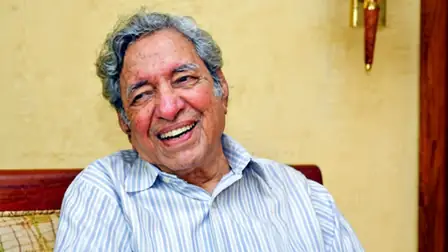
Mumbai’s music scene lost a titan on March 7, 2012, but Ravi Shankar Sharma’s legacy endures. Known simply as Ravi, he rose from dire poverty to become one of Hindi cinema’s most cherished composers. Born on March 3, 1926, in Delhi, Ravi’s life was a testament to unyielding grit.
Without formal classical training, Ravi absorbed music from his father’s bhajans. He mastered the harmonium as a child and soon handled multiple instruments with ease. Family hardships forced him into odd jobs, including electrician work in Delhi, yet his heart beat for melodies.
In 1950, armed with dreams, Ravi arrived in Mumbai. Homeless, he haunted studios by day and slept on Malad railway station platforms by night. Two grueling years passed, but surrender was never an option.
Fate turned in 1952 when composer Hemant Kumar spotted him. Ravi sang chorus for ‘Vande Mataram’ in ‘Anand Math,’ marking his entry. By 1955, he debuted as music director with ‘Albelu.’ Hits followed: ‘Vachan,’ ‘Narsi Bhagat,’ and the iconic ‘Chaudhvin Ka Chand.’
Ravi’s genius lay in crafting lyrics first, then tunes, birthing timeless tracks. Nominations and wins rolled in—Filmfare for ‘Chaudhvin Ka Chand,’ awards for ‘Gharana’ and ‘Khandan.’ Over 50 films bore his magic, from ‘Woh Kaun Thi’ to ‘Nikaah.’
Mahendra Kapoor’s chartbusters owe much to Ravi. Post-1970 hiatus, he roared back with ‘Nikaah’ and scored Malayalam films as ‘Bombay Ravi’ until 2005. Ravi’s journey from struggle to stardom inspires every aspiring artist.