
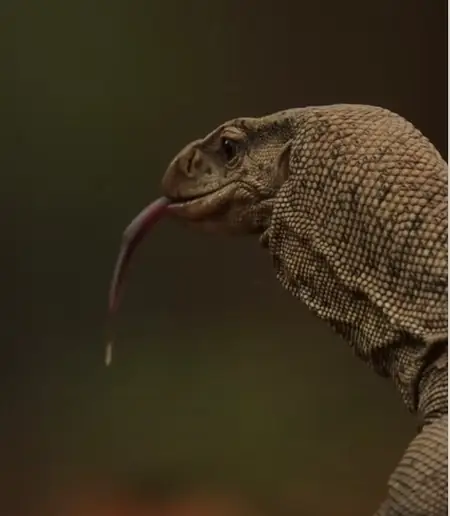
In the intricate web of nature’s balance, few creatures embody resilience and utility quite like the monitor lizard, known locally as ‘goh’ or Bengal monitor. This massive reptile, often mistaken for a venomous monster, plays a pivotal role in ecosystems across India. Resembling a giant lizard with a forked tongue that hisses menacingly, it detects prey through chemical cues, making it a formidable hunter.
Commonly sighted in fields, forests, and even human settlements, the Bengal monitor (Varanus bengalensis) is India’s largest lizard species. Despite folklore painting it as deadly poisonous, scientific evidence debunks this myth. Unlike the Komodo dragon, which carries mild bacteria-laden saliva, Indian monitors lack venom. Bites can cause deep wounds prone to infection due to the reptile’s carnivorous diet of insects, rodents, snakes, frogs, fish, and small birds.
Juvenile monitors stick to insects, while adults tackle larger prey. Their long, bifurcated tongue constantly samples the air, relaying information to the Jacobson’s organ in the mouth for precise prey location. This adaptation underscores their status as apex insectivores and rodent controllers.
Ecologically invaluable, monitors curb pest populations that ravage crops. Females dig burrows to lay eggs, thriving in diverse habitats from tiger reserves like Dudhwa to urban fringes. Active during monsoons, they adapt seamlessly to human proximity without posing real threats.
Tragically, poaching and superstition drive their decline. Protected under India’s Wildlife Protection Act of 1972, killing or trading them is illegal, yet fear-fueled killings persist. Conservationists warn that losing these natural pest controllers disrupts biodiversity. Educating communities about their harmless nature is key to safeguarding this vital species for future generations.