
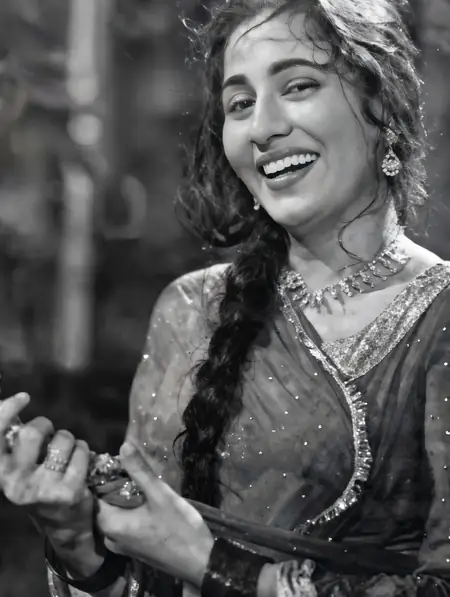
In the golden era of Bollywood, Madhubala wasn’t just a face that captivated millions; she was a trailblazer who shattered societal barriers long before her time. At an age when most girls were confined to playgrounds and classrooms, this 12-year-old prodigy learned to drive, symbolizing her unyielding spirit and forward-thinking mindset.
Born Mumtaz Jehan Begum on February 14, 1933, in Delhi, Madhubala entered a world of hardship early. Her father, Ataullah Khan, uprooted the family from Peshawar to Mumbai seeking better prospects, but financial woes forced young Mumtaz into the spotlight. Debuting at nine in ‘Basant’ as Baby Mumtaz, her innocent charm quickly won hearts.
By 1947, rechristened Madhubala in ‘Neel Kamal,’ her career skyrocketed. Films like ‘Mahal,’ ‘Fagun,’ ‘Howrah Bridge,’ ‘Kala Pani,’ and ‘Chalti Ka Naam Gaadi’ cemented her legacy alongside legends such as Raj Kapoor, Dilip Kumar, Ashok Kumar, and Dev Anand. Yet, her audacious decision to master driving at 12 stood out as a testament to her independence in a conservative era.
Madhubala’s personal life mirrored her cinematic drama. Her intense romance with Dilip Kumar ended amid family pressures, leading her to marry Kishore Kumar, who stood by her through her final days. Health woes struck in the 1960s—a ventricular septal defect caused blood accumulation, and London doctors deemed surgery too risky. Undeterred, she maintained her self-reliance.
Over 70 films later, Madhubala left an indelible mark. Passing at 36 on February 23, 1969, her story endures as one of courage, talent, and defiance against odds.