
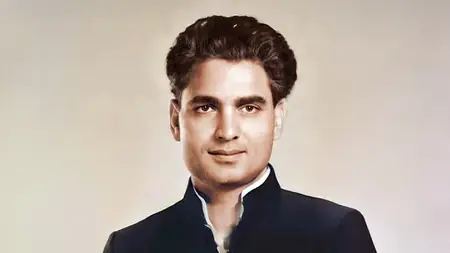
In the golden era of Hindi cinema, few directors left an indelible mark with so few films as Kamal Amrohi. Born Syed Amir Haider Kamal Naqvi on January 17, 1918, in Amroha, Uttar Pradesh, into a prosperous zamindar family, Amrohi’s life was a tapestry of poetry, passion, and perfectionism. His childhood fascination with literature and shayari propelled him into the world of films, where he scripted classics like ‘Jailor’ (1938), ‘Pukar’ (1939), and ‘Shahjahan’ (1946) under Sohrab Modi’s Minerva Movietone. K.L. Saigal’s mentorship opened doors, but it was Amrohi’s directorial debut that sealed his legend.
‘Mahal’ in 1949, starring Madhubala and Ashok Kumar, was a sensation. Blending mystery, romance, and supernatural elements, it introduced the iconic song ‘Aayega Aanewala’ in Lata Mangeshkar’s voice, still echoing through generations. Overnight, Amrohi became synonymous with cinematic excellence.
His marriage to Meena Kumari in 1952 inspired ‘Daéra’ (1953), a poignant love story. But nothing matched the epic ‘Pakeezah’ (1972). Conceived in 1958, production dragged for 14 years amid personal turmoil, health issues, and marital strife with Meena Kumari. Amrohi wrote the screenplay, dialogues, lyrics, and directed it himself. Meena Kumari’s portrayal of a courtesan in her final role was transcendent, with songs like ‘Chalte Chalte’ and ‘Inhi Logon Ne’ becoming eternal. Critics hail ‘Pakeezah’ as Indian cinema’s most beautiful tragedy.
‘Razia Sultan’ (1983), starring Hema Malini, was his last completed film—a lavish historical drama that underperformed commercially despite its grandeur. Unfinished projects like ‘Majnu’ and ‘Aakhri Mughal’ bore testament to his ambitious vision, cut short by failing health.
Amrohi’s personal life mirrored his films’ drama: three marriages, first to Bilqis Bano, then Mahmoodi (mother of sons Shandar, Tajdar, and daughter Rukhsar), and finally Meena Kumari. Their love soured into separation, yet in death, they reunited symbolically—he was buried beside her in Mumbai’s Rahmatabad cemetery, as per his wish, on February 11, 1993, at age 75.
Founding Kamal Pictures in 1953 and Kamalistan Studios in 1958, Amrohi embodied Mughal opulence in his work—stubborn, perfectionist, poetic. Though he made only four films, each is a masterpiece. Today, as Bollywood evolves, Amrohi’s legacy endures, a testament to quality over quantity.