
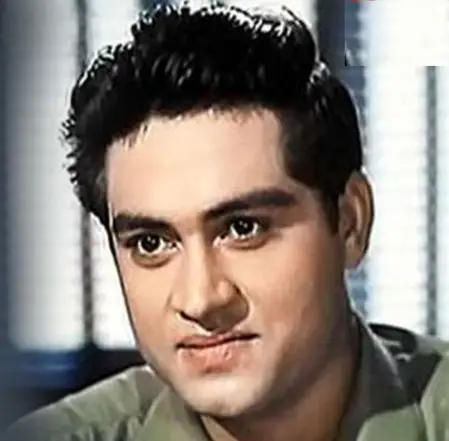
In the golden era of Bollywood, few stars captured hearts like Joy Mukherjee. Known for his romantic charm and boyish good looks, Joy became the darling of the 1960s. Born on February 24, 1939, in Jhansi, he hailed from the illustrious Mukherjee family. His father, Shashadhar Mukherjee, was a pioneering filmmaker behind classics like Kismat and Anarkali, while his uncle was the legendary Ashok Kumar.
Joy’s entry into films reads like a script from one of his own movies. As a college student immersed in wrestling, tennis, and football, he was offered a small role in Ram Mukherjee’s 1960 release Hum Hindustani. Starring Sunil Dutt and Asha Parekh, the film needed someone to play Sunil’s younger brother. Joy turned it down flat for a mere 15 rupees.
Undeterred, the makers sweetened the deal. When the pay jumped to 200 rupees – enough to cover his college pocket money – Joy said yes. It marked his unassuming debut opposite Helen, as no major actress wanted the bit part. Little did he know, this whim would launch a stellar career.
True stardom arrived with Love in Simla in 1960, directed by R.K. Nayyar. Paired with Sadhana, the film was a massive hit, propelling both to fame. Joy followed it with a string of blockbusters: Phir Wohi Dil Laya Hoon, Love in Tokyo, Ziddi, Ek Musafir Ek Haseena, Shagird, Ishara, and Aao Pyar Karen. Composer O.P. Nayyar’s melodies defined most of these successes, cementing Joy’s image as the heartbeat of romance.
Venturing into production and direction, Joy made Humsaya (1968) with Sharmila Tagore and Mala Sinha, Miss Bombay (1977) featuring Rajesh Khanna and Zeenat Aman, and Chhaila Babu, which he also helmed. Commercial flops led to financial woes, forcing him into lesser films like Ehsaan, Mujrim, Aag aur Daag, and Kahani Phoolan Ki.
On March 9, 2012, the 73-year-old icon passed away in Mumbai, leaving behind a legacy of silver-screen magic that continues to enchant generations.