
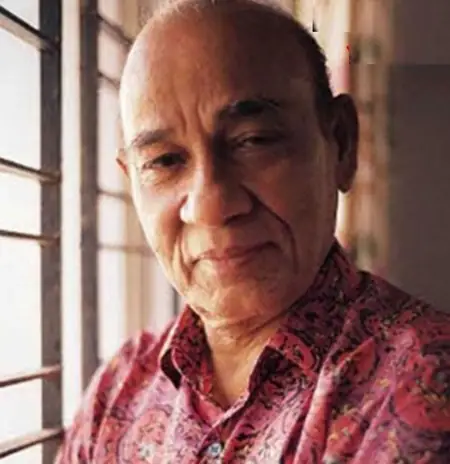
In the golden era of Hindi cinema, few names shine as brightly as Indeevar, the legendary lyricist whose words have etched themselves into the hearts of millions. Over four decades, he penned more than a thousand timeless songs for over 300 films, blending simplicity with profound emotion. His death anniversary on February 27 reminds us of a career that began in struggle and soared to immortal heights.
Born Shyamlal Babu Rai in Barua Sagar, Jhansi district, Uttar Pradesh, Indeevar’s passion for poetry blossomed early. During India’s freedom struggle, he wrote patriotic verses under the pseudonym Azaad. Marriage brought him to Mumbai, where he faced lean years before breaking through. His debut came in 1946 with ‘Double Face,’ but it was 1951’s ‘Malhar’ that catapulted him to fame. The song ‘Bade Armaano Se Rakha Hai Balam Teri Kasam,’ composed by Roshan, became an instant sensation.
Indeevar’s golden partnership with Kalyanji-Anandji produced anthems of patriotism and social commentary. In Manoj Kumar’s ‘Upkaar’ and ‘Purab Aur Paschim,’ his lyrics wove national pride with heartfelt narratives. Tracks like ‘Abhi Tumko Meri Zaroorat Nahi’ still evoke deep sentiment. His work extended to Rakesh Roshan’s blockbusters—’Kammo Chor,’ ‘Khudgarz,’ ‘Karan Arjun,’ and ‘Koyla’—each song a masterpiece that captivated audiences.
Beyond Hindi films, Indeevar’s versatility shone in Bengali cinema with ‘Amanush,’ earning him a Filmfare Award for ‘Dil Aisa Kisi Ne Mera Toda.’ He even crafted pop hits for Nazia and Zoheb Hassan, including ‘Aap Jaisa Koi’ and ‘Boom Boom,’ which defined a generation’s youth.
From ‘Safar’ and ‘Don’ to ‘Kurbani’ and ‘Kala Bazar,’ Indeevar’s discography is a treasure trove. His lyrics captured life’s truths with unmatched grace. On February 27, 1997, the industry lost a giant, but his songs ensure his legacy endures, resonating across generations.