
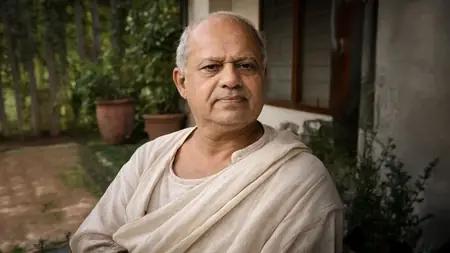
Mumbai, February 15. On a Christmas night in 1910, the America-India Picture Palace in Bombay brimmed with eager spectators. The screen flickered with ‘The Life of Christ,’ a foreign film that held the audience spellbound. Amid the crowd sat a 40-year-old man, his eyes not just watching the movie but envisioning a bold future for Indian storytelling.
As Jesus Christ moved vividly on screen, a spark ignited in Dhundiraj Govind Phalke’s mind: ‘If Christ can come alive on film, why not our Ram and Krishna?’ That night, he emerged from the theater transformed—no longer just an ordinary man, but the visionary known today as Dadasaheb Phalke, the father of Indian cinema.
Born on April 30, 1870, in Tryambakeshwar, Nashik, Maharashtra, into a Marathi Brahmin family, Phalke’s early life was steeped in tradition. Yet, his fascination with moving images set him apart. When he shared his dream of creating ‘living pictures,’ friends and family dismissed him as mad. Cinema was seen as British magic, but Phalke was determined to prove it was science.
To demonstrate, he planted a pea seedling in a pot and photographed it frame by frame over a month. Projecting the footage at speed created India’s first time-lapse, showing the plant growing before stunned eyes. This simple experiment shattered doubts and fueled his resolve.
Funding the dream was no easy task. Cameras and raw film stock were available only in London. Enter Saraswatibai, Phalke’s devoted wife and silent heroine. While others mocked him, she pawned her jewelry and mangalsutra. With those funds, Phalke journeyed to London in 1912, returning with a Williamson camera—and the blueprint for an entire industry.
Now came the making of India’s first feature film, ‘Raja Harishchandra.’ The script was ready, equipment in hand, but a cultural hurdle loomed: who would play Queen Taramati? In 1913’s conservative India, no respectable woman would act on screen. Phalke scoured red-light districts but faced rejection even there.
Undeterred, his gaze fell on Anna Salunke, a cook at a tea stall with a graceful demeanor. Dressed in a sari, Salunke became Indian cinema’s first ‘heroine’—a man in the role. Phalke’s home in Dadar turned into a makeshift studio, with the entire family pitching in. Saraswatibai cooked for the 60-member crew, mixed chemicals for developing reels, and held reflectors under scorching sun, earning her title as India’s first female technician.
On May 3, 1913, at Coronation Cinema in Bombay, ‘Raja Harishchandra’ premiered. As scenes of the king’s trials unfolded, audiences rose, removing shoes and bowing to the screen. Hits like ‘Mohini Bhasmasur’ and ‘Lanka Dahan’ (1917) followed, with halls echoing ‘Jai Shri Ram’ at Lord Ram’s appearance. Phalke wasn’t just a filmmaker; he was resurrecting mythology.
But eras shift. In 1931, Ardeshir Irani’s ‘Alam Ara’ introduced sound, shattering the silent film’s magic. Phalke’s visual mastery couldn’t adapt to dialogue-driven cinema. His sole talkie, ‘Gangavataran,’ flopped disastrously.
In his final years, Phalke returned to Nashik, broke and ill, while Mumbai’s studios thrived. On February 16, 1944, at age 73, he passed away in obscurity. Honoring his legacy, India launched the Dadasaheb Phalke Award in 1969 on his centenary, cementing his role as cinema’s pioneer.