
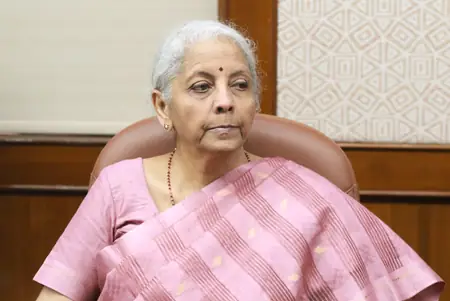
New Delhi, February 23 – Finance Minister Nirmala Sitharaman delivered a stern warning to India’s banking sector on Monday, urging institutions to refocus on their primary responsibilities rather than pushing unnecessary products like insurance on unsuspecting customers. Labeling mis-selling as outright criminal behavior, she made it clear that such practices would not be tolerated under any circumstances.
Speaking at a press conference following a meeting with the Reserve Bank of India’s Central Board of Directors post-Union Budget, Sitharaman reiterated her long-standing concerns over aggressive cross-selling tactics. ‘If a customer comes in for a home loan with solid collateral, they shouldn’t be coerced into buying extra insurance policies,’ she emphasized, highlighting real-world scenarios plaguing the sector.
The minister expressed satisfaction with the RBI’s firm directives to banks, prohibiting mis-selling unequivocally. She stressed that banks must generate profits through legitimate channels—lending and mobilizing deposits—rather than dubious sales strategies. A key focus, she noted, should be on boosting Current Account and Savings Account (CASA) deposits, which form the backbone of sustainable banking operations.
Recalling past interactions, Sitharaman pointed out that when banks previously sought additional government funds, she had advised them to prioritize CASA mobilization instead of direct infusions. This approach, she argued, strengthens the financial system’s resilience.
Shifting gears to global trade tensions, the Finance Minister addressed recent U.S. tariff hikes, cautioning against premature assessments of their impact. With the Commerce Ministry actively monitoring developments, decisions on future trade negotiations will be handled by official delegations. Notably, a proposed interim trade deal between India and the U.S. has been postponed amid these changes.
Sitharaman underscored India’s commitment to global trade pacts, citing successful agreements with Australia, New Zealand, UAE, Qatar, Oman, the EU, and the UK. These moves are pivotal in fortifying India’s economy through deeper international market integration.
On surging gold prices, she attributed the spike primarily to heightened purchases by central banks worldwide, alongside silver. For Indian households, gold remains a cherished investment, especially during festive seasons when demand surges. Reassuring the public, Sitharaman affirmed that both the government and RBI are vigilantly tracking the situation, with current levels not yet cause for alarm.