
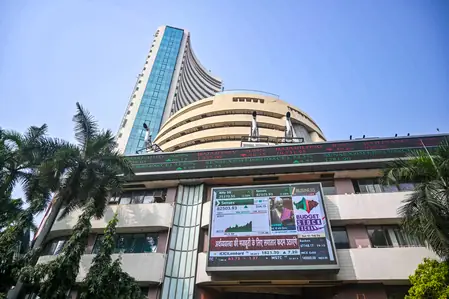
Mumbai’s stock market plunged into red territory on Friday afternoon, mirroring global jitters. By 1 PM, the Sensex had shed 588 points, or 0.72%, to hover at 79,427, while the Nifty slipped 154 points, or 0.62%, to 24,612. This sharp downturn signals deepening investor concerns amid escalating geopolitical tensions.
Banking and realty sectors bore the brunt of the sell-off, with Nifty Realty down 1.85% and Nifty Bank declining 1.31%. Auto, services, and consumer stocks also faced heavy pressure, dragging the broader indices lower. In contrast, defense, energy, PSE, oil & gas, commodities, and metals managed to stay in the green, offering pockets of resilience.
The primary culprit behind this market rout is the protracted conflict involving the US, Israel, and Iran. As the war drags on, risks to global energy supplies have intensified, souring sentiment across equity markets. Investors are bracing for prolonged disruptions that could ripple through economies worldwide.
Crude oil prices surged in response, with WTI crude climbing to $80.39 per barrel and Brent crude hitting $84.84 per barrel. This spike in energy costs is amplifying fears of inflation and supply chain bottlenecks. Safe-haven assets like gold and silver saw renewed buying interest; Comex gold rose 0.81% to $5,120 per ounce, while silver jumped 2.96% to $84.61 per ounce.
Overseas markets provided little relief, as US indices closed lower on Thursday—Dow Jones fell 1.61% and Nasdaq dipped 0.26%. Compounding the woes, Foreign Institutional Investors (FIIs) continued their selling spree, offloading equity worth ₹3,752.52 crore on Thursday alone. This sustained outflow is weighing heavily on Indian benchmarks.
Analysts warn that until geopolitical risks subside, volatility will persist. Domestic investors might find opportunities in defensive sectors, but the road ahead looks bumpy for risk assets. Markets will closely watch upcoming developments in the Middle East and US economic data for cues on the next move.