
Mumbai’s urban landscape is set for a transformative leap as the Mumbai Metropolitan Region Development Authority (MMRDA) presented its budget for the financial year 2026-27 on Monday. Clocking in at a whopping ₹48,072.57 crore in total outlay, this marks the authority’s first surplus budget since 2017-18, signaling a remarkable financial turnaround.
Just three years ago, in 2024-25, MMRDA grappled with a deficit of ₹7,468 crore. Fast-forward to now, and the authority has not only erased that shortfall but achieved a surplus of ₹17 lakh. This feat underscores decisive fiscal reforms driven by strategic land monetization, bolstering the Urban Transport Fund (UTF), enhanced project revenues, and savvy international partnerships for capital infusion.
The budget isn’t just about numbers; it’s a testament to robust institutional discipline, improved revenue streams, prudent borrowing, and heightened global credibility. Even as it expands one of India’s largest infrastructure projects, MMRDA has restored fiscal balance, cementing its status as the nation’s most financially stable regional development body.
Of the total expenditure of ₹42,026.14 crore, a staggering 87.42% is earmarked for development projects and schemes, highlighting MMRDA’s unwavering commitment to capital-intensive growth. This proposed outlay surges 58.57% over the revised estimate of ₹30,316.18 crore for 2025-26 and leaps 53.52% ahead of last year’s revised figure of ₹31,313.13 crore.
From consistent deficits since 2017-18, MMRDA has now notched a modest surplus of ₹0.17 crore for 2026-27. The budget integrates dynamism, economic decentralization, water security, climate resilience, and housing reforms into a cohesive regional transformation strategy.
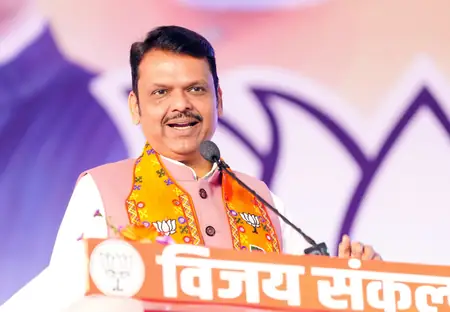
More than a financial statement, this budget serves as a roadmap to evolve the Mumbai Metropolitan Region into a globally competitive, investment-ready, and sustainable urban ecosystem. Maharashtra Chief Minister Devendra Fadnavis hailed it as a pivotal institutional milestone post-2017-18, reflecting investor confidence and a vision for long-term infrastructure-led growth.