
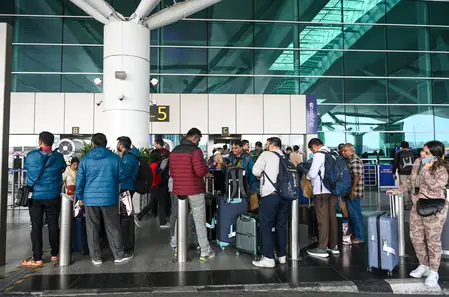
New Delhi’s top court is taking a hard look at the wild swings in airfares charged by private airlines during festival seasons. On Monday, the Centre informed the Supreme Court that a thorough investigation is underway into these fluctuating fares and additional fees that burden passengers.
A bench led by Justice Vikram Nath and Justice Sandeep Mehta was hearing a Public Interest Litigation (PIL) challenging the opaque, exploitative, and algorithm-driven pricing models in India’s civil aviation sector. The petition also spotlighted the reduction in complimentary check-in baggage limits for travelers.
Additional Solicitor General Anil Kaushik, representing the government, assured the court that high-level consultations are in progress to address these concerns. He noted that the Solicitor General has convened a meeting, and the matter has been escalated to senior authorities. Seeking four weeks, the government promised a detailed counter-affidavit.
The Supreme Court granted the time extension, listing the case for further hearing on March 23. The bench emphasized the gravity of fare volatility during peak travel periods, calling it a serious issue that warrants attention under Article 32 petitions.
The court also dismissed a plea from the Federation of Indian Airlines (FIA) to intervene, stating that the government would consult stakeholders before any policy decisions. ‘The Centre will deal with you,’ the bench remarked, adding that a committee might be formed.
This PIL, filed by social activist S. Lakshminarayanan through lawyer Charu Mathur, argues that air travel—an essential service—has become prohibitively expensive due to unregulated fare hikes. Sudden doublings or triplings of prices during emergencies, festivals, or peak times hit urgent travelers hard, especially those with medical, educational, or job-related needs.
The petition further criticizes airlines for slashing free baggage allowance from 25 kg to 15 kg, turning a standard service into an extra revenue stream via baggage fees. Deeming these practices arbitrary and violative of Article 21, it urges the court to direct the creation of a regulatory framework or an independent aviation tariff regulator with quasi-judicial powers to oversee fares, ensure compliance, and resolve passenger grievances.
As festival travel demand surges, this case could reshape India’s aviation pricing landscape, prioritizing passenger rights over unchecked profiteering.