
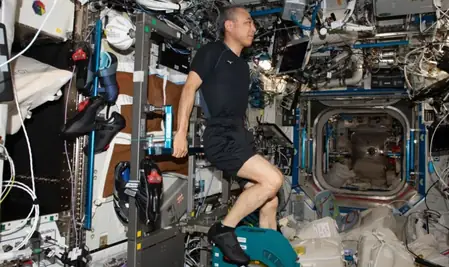
Floating in the weightless void of space presents unique challenges to the human body. Without Earth’s gravity, astronauts aboard the International Space Station (ISS) face rapid muscle atrophy and bone density loss. Every month, bones can weaken by up to 1%, mimicking accelerated aging. To combat this, crew members dedicate two hours daily to rigorous exercise regimens using cutting-edge equipment designed for microgravity.
NASA’s Advanced Resistive Exercise Device (ARED), installed in 2008, simulates weightlifting with a piston and flywheel system delivering up to 600 pounds of resistance. Astronauts perform squats, deadlifts, and bench presses to maintain muscle mass and bone strength. The T2 Treadmill secures them with harnesses and bungee cords, preventing them from drifting away during high-intensity runs.
Another key tool is the Cycle Ergometer with Vibration Isolation and Stabilization (CEVIS), upgraded in 2023. This computerized bike provides precise workloads, monitoring heart rate and speed while isolating vibrations to protect the station’s delicate structure. These devices enable a mix of aerobic and resistance training, shifting from long, low-intensity sessions to shorter, high-intensity intervals proven more effective.
Research underscores the value of this approach. High-intensity, low-volume workouts preserve muscle and bone health while freeing time for mission tasks. VO2 max tests reveal declining oxygen uptake in long flights, emphasizing the need for optimized protocols. Pre-flight training enhances in-orbit performance, with muscle biopsies showing molecular adaptations that largely mitigate deterioration. Yet, individual responses vary, compounded by cramped quarters, equipment maintenance, and environmental stressors like heat and humidity.
As space exploration pushes boundaries—think Mars missions—these routines evolve, ensuring astronauts return robust and ready for Earth’s gravity.